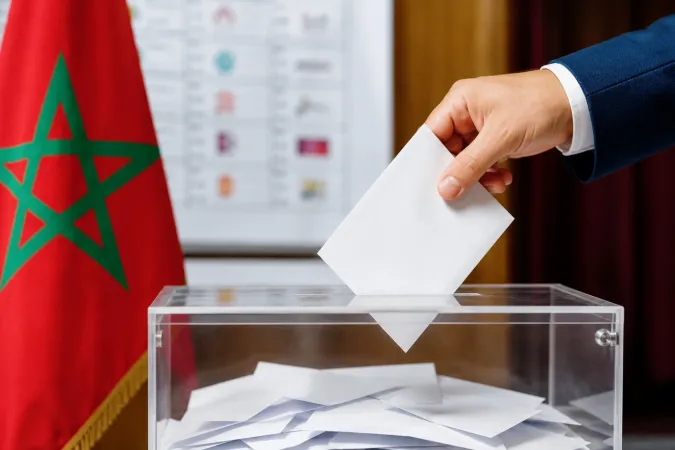
With less than three weeks to go before Morocco’s legislative elections on 23 September 2026, the country’s main political parties have unveiled programs that converge heavily on social and economic concerns.
Purchasing power, youth employment, healthcare, education and social protection dominate the offers, as parties seek to respond to household pressures and lingering public expectations following earlier protests.
The PAM presented a detailed five-year program in early September structured around five “pacts” and 20 commitments, with an estimated cost of MAD 350 billion (approximately $37.6 billion) between 2027 and 2031. Key pledges include making electricity bills of up to MAD 100 per month free, reducing income tax on salaries, setting a minimum pension of MAD 3,000 and raising the minimum direct social assistance to MAD 1,000.
On youth, the party proposes unified pathways for those not in education, employment or training, first-job contracts, improved access to rental housing and the integration of around 300,000 young people annually. It also targets full health coverage, the upgrading of 1,600 primary health centers and 90 hospitals, and the creation of at least one million net jobs.
The RNI, the largest party in parliament, framed its 2026–2031 program around protecting purchasing power, strengthening public services and expanding employment opportunities.
It proposes a “social shield” indexing direct aid on inflation, increases in the minimum wage (SMIG and SMAG), higher pensions and an education tax credit of up to MAD 5,000 per child per year.
On health, the RNI highlights territorial health groupings, family doctors, mobile units, a national emergency number and expanded telemedicine coverage under the AMO scheme.
For jobs, it aims to bring unemployment down to 9% by 2030, allocate MAD 15 billion and create one million jobs across tourism, agriculture, industry, services, digital sectors and the 2030 World Cup economy.
The Istiqlal party has organized its offer around the protection of the Moroccan family and national values, preservation of purchasing power, zero tolerance for corruption and conflicts of interest, defense of public services, and reinforcement of national sovereignty.
The party stresses support for middle-class and vulnerable families, measures to help young people enter the labor market, and broader poverty-reduction efforts.
The USFP released a program built around 20 commitments with a strong emphasis on employment and industrial growth. It targets 250,000 industrial jobs and 500,000 total jobs linked to the economic momentum of the 2030 World Cup, a 40% rise in industrial exports and an additional 1.5 percentage points of annual growth.
The PPS has put forward one of the more ambitious financial packages, estimating an additional MAD 575 billion in funding needs. Its proposals include eliminating the rent economy, introducing greater fiscal justice, creating a public investment bank, generating one million jobs for young people, raising the minimum wage by 15% in two stages, providing a MAD 1,000 allowance per school child, expanding industry’s share of GDP to 20%, and significantly reinforcing public hospitals and schools.