Spanish political and football circles have once again demonstrated their willingness to weaponize sport for short-term political gain, this time by dragging the July migrant crisis in Ceuta into the debate over the 2030 FIFA World Cup final.
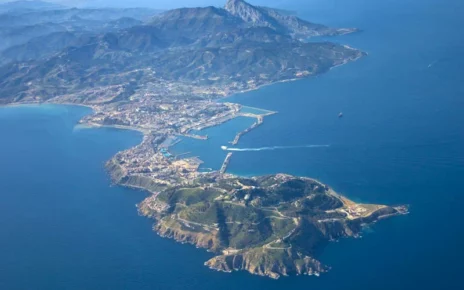
Last Friday, Rafael Louzán, president of the Spanish Football Federation (RFEF), travelled to Ceuta accompanied by national team coach Luis de la Fuente.
What was presented as a gesture of solidarity quickly turned into a thinly veiled political operation.
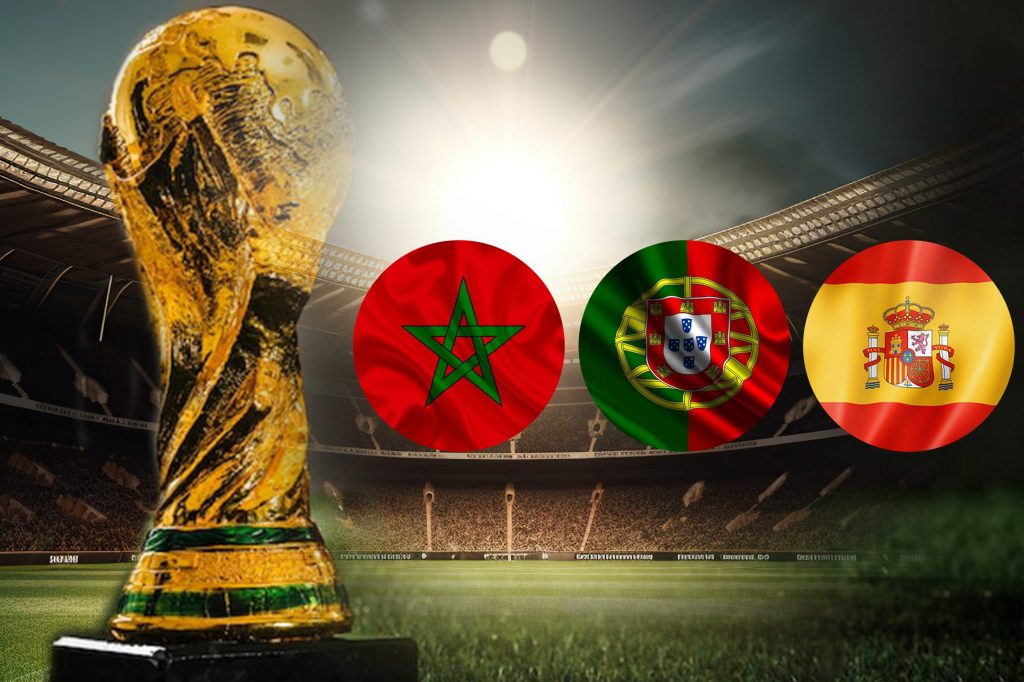
Louzán used the enclave to push Spain’s claim for the World Cup final while explicitly linking the migrant arrivals of late July to the joint Spain-Portugal-Morocco candidacy.
“What happened in Ceuta should never have occurred,” he declared, before reminding everyone of the commitments made by the three partners.
The move was an attempt to leverage a humanitarian and border episode to pressure Morocco and advance Madrid’s ambitions for the final.
This has been described by critics as an instrumentalization of sport for domestic political theatre and territorial posturing.
Three days later, Spanish Sports Minister Milagros Tolón delivered an indirect but unmistakable rebuke.
“What happened in Ceuta should not influence things, because sport is sport,” she stated.
Without naming Louzán, Tolón insisted the migrant crisis must remain completely separate from the organization of the 2030 World Cup.
While she still voiced Spain’s desire to host the final, she correctly recalled that the decision belongs to FIFA and that the event must not be contaminated by political calculations.
Certain Spanish political circles have repeatedly sought to turn every difficulty in Ceuta into an anti-Moroccan narrative. Accusations without irrefutable proof, opportunistic visits, and now the mixing of World Cup logistics with border tensions reveal a readiness to sacrifice the spirit of a joint candidacy for short-term domestic advantage.
Meanwhile, Morocco continues to prepare seriously for 2030. The Kingdom has placed the future Grand Stade Hassan II in Benslimane, with its 115k seats, at the center of its ambitions and is advancing concrete infrastructure projects.
Rabat has treated the joint organization as a partnership of equals rather than an opportunity for political point-scoring.
Morocco deserves partners who respect the joint candidacy rather than treat it as a platform for pressure. FIFA will decide the final on sporting and organizational merits, not on the back of calculated visits to Ceuta.