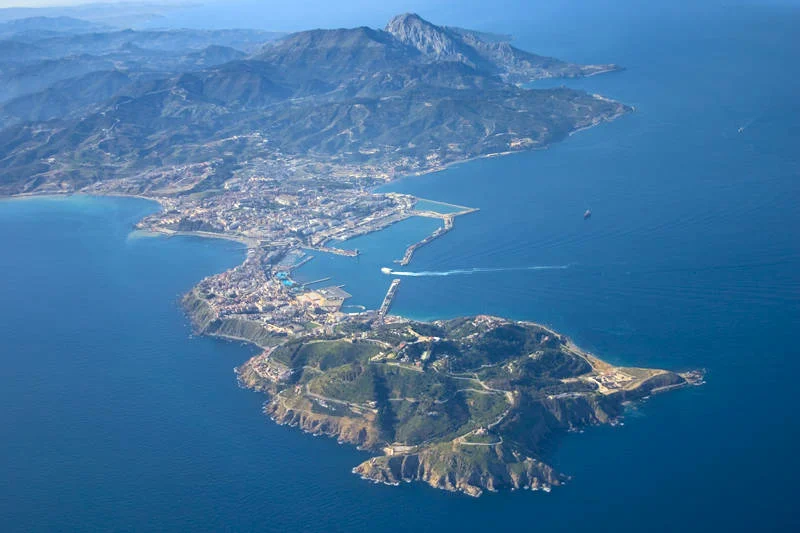
The mass irregular crossings into Ceuta at the end of July 2026 have been transformed into a domestic political football in Spain.
Opposition parties are competing in increasingly confrontational language that critics describe as warmongering, while indulging anti-Moroccan sentiment and reopening centuries-old territorial and historical wounds, often without presenting whatsoever evidence of high-level Moroccan state responsibility.
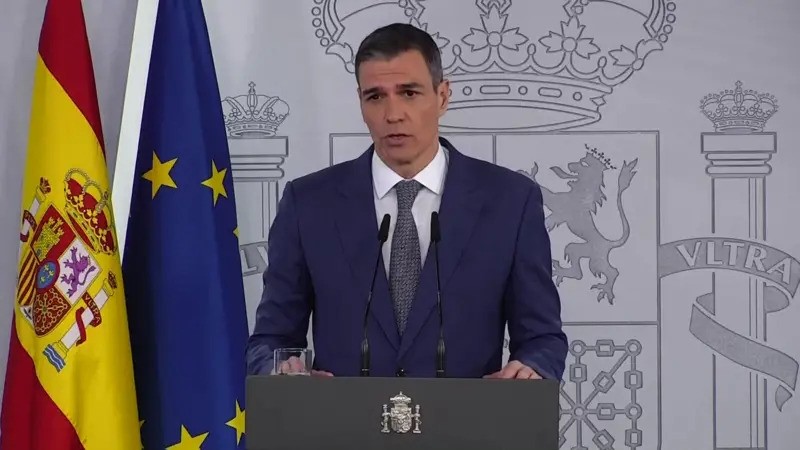
During Pedro Sánchez’s parliamentary appearance on 3 September, PP leader Alberto Núñez Feijóo and Vox leader Santiago Abascal led the charge.
Feijóo asserted that the operation “came from Morocco, was consented by Morocco, and there are indications that Morocco coordinated it,” describing it as a possible act of hybrid warfare and an ongoing “invasion.”
Abascal went further, insisting Ceuta had been “taken by force,” calling the events an outright “invasion” and part of a “hybrid war” perpetrated by Morocco, while labelling Sánchez the “ambassador of Morocco in Spain” and Morocco his “master.”
Both framed the crisis as a deliberate assault on Spanish sovereignty rather than a complex migratory episode driven by multiple factors, including social-media amplification and local capacity strain and legal pull factors created by Madrid.
Similar accusations of an “attack” by Morocco came from some government partners, including voices from ERC and Sumar.
Yet Sánchez maintained that no solid evidence had been delivered to the government proving Moroccan authorities planned or executed the crossings.
Meanwhile in Spanish streets on 2 September, demonstrations in support of Ceuta took place. Outside the Congress in Madrid, members of the neonazi group Núcleo Nacional joined the gathering.
Participants chanted slogans including “musulmán el que no bote” (a variant of the football-style chant meaning “the one who doesn’t jump is a Muslim”), “Spain is Christiana and not Muslim” and other anti-migrant chants.
Police later dispersed parts of the protest after objects were thrown and racist chants intensified. Similar far-right elements appeared in other cities, using the crisis to push broader anti-Muslim and anti-Moroccan messaging.
On the military side, retired and serving senior officers have privately discussed the risks of future scenarios with Spanish media highlighting the state of fear in Spain. Some urged clearer deterrent messaging and strengthened presence in the occupied enclave of Ceuta.
As anti-Moroccan circles in Spain instrumentalize the kingdom in their domestic proxy battles, they take for granted the essential role Morocco continues to play in curbing irregular flows.
Through sustained interceptions, dismantling of smuggling networks and close operational cooperation with Spain, Moroccan efforts have helped keep pressure on the Western Mediterranean route comparatively contained relative to other corridors, a dynamic regularly reflected in IOM tracking of arrivals and route trends.
This escalatory rhetoric does not go unnoticed in Rabat, which has so far treated the exchanges as internal proxy battles.