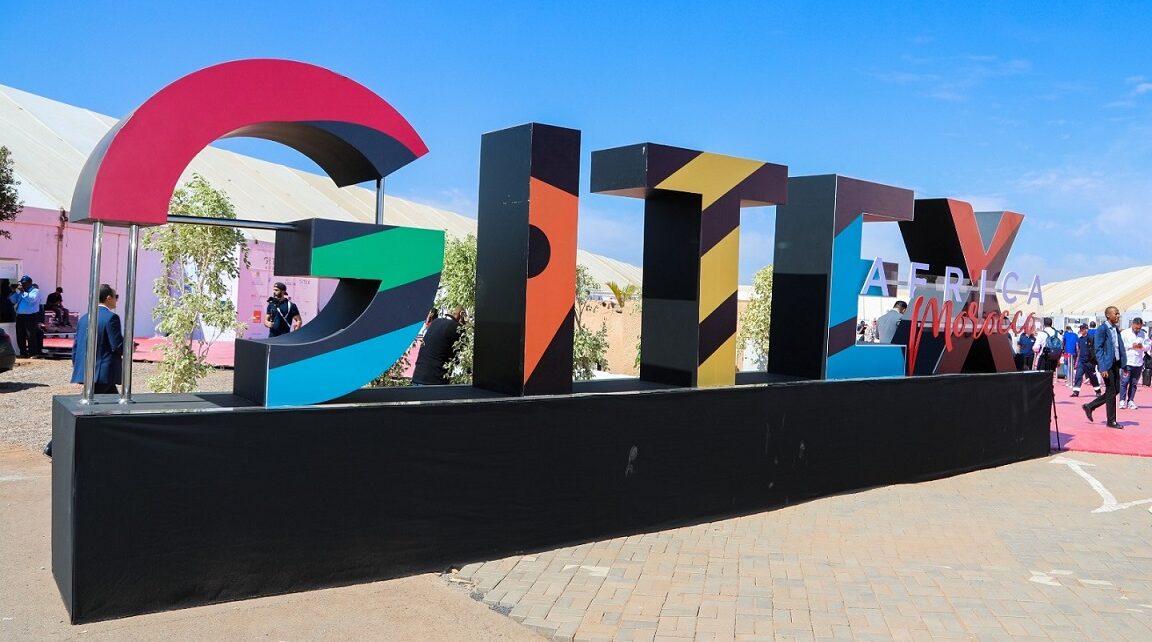
Morocco’s Digital Development Agency (ADD) has launched a review of GITEX Africa four years after the technology event’s launch, seeking to determine whether it is delivering enough value for the country. The agency has hired an external consultant to assess the event’s economic, business, technology and media impact, and to examine how GITEX Africa should evolve in the coming years.
The consultant will begin by mapping the money, people, equipment and other resources used to organize the event, before examining six areas: strategy, economy, institutions, tech ecosystem, technology and media. The economic component will look at exhibitor and visitor spending, revenue, local suppliers and jobs, as well as startup deals, fundraising and investment, while the technology and media components will assess new technologies, university-industry partnerships, and press and social media coverage.
The ADD also wants to identify what is working well at GITEX Africa and what needs to change, with the consultant tasked with benchmarking the event against major international technology gatherings and preparing options for its future, including targets and progress measures. The work is structured in five stages: defining scope, building an evaluation framework, collecting data, analysing results and producing a final report, drawing on roughly 20 interviews and 10 focus groups.
The review comes as Morocco pursues its Digital Morocco 2030 strategy, which carries a planned budget of about $1.1 billion for 2024-2026 and aims to raise direct technology jobs from 60,000 to 240,000 by 2030 while supporting 3,000 active startups; digital exports and outsourcing revenue are expected to reach 40 billion dirhams, or roughly $4 billion, by 2030.
The reassessment also comes as GITEX expands beyond Morocco, with Kaoun International, the Dubai World Trade Centre subsidiary behind the global GITEX brand, preparing events in Nigeria and Egypt alongside plans for Europe and Asia. Recent editions in Morocco have drawn more than 55,000 visitors from over 130 countries, 1,450 to 1,500 exhibitors from 58 countries, and 412 international venture capital firms managing more than $350 billion in assets.