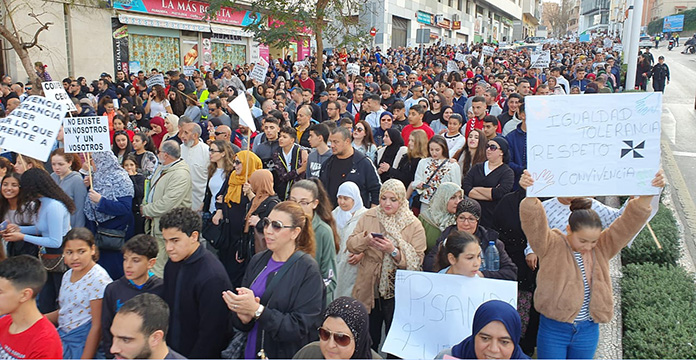
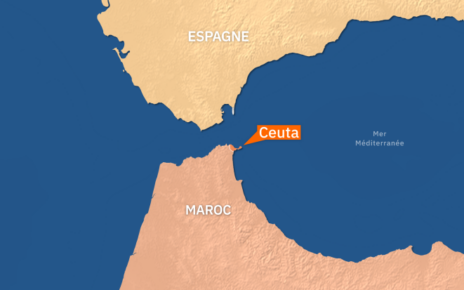
Tens of thousands of Moroccan youth debunk myth of EU eldorado in occupied-CeutaMany of the Moroccan migrants who rushed into Spain’s colony of Ceuta last week have returned home, describing how hopes of a better life in the EU quickly dissolved into hunger, uncertainty and disappointment.
Among those heading back were not only unemployed youths but also factory workers, drivers, tradesmen and service-sector employees who said they had been persuaded by social media posts and word-of-mouth messages suggesting that reaching Ceuta would open a pathway to mainland Europe.
“We were told that once we crossed everything would change,” said one returnee from northern Morocco who had left a job in the automotive sector. “But there was no work, no future and no way forward.”
The wave of returns highlights the changing profile of migration candidates in northern Morocco, a region transformed over the past two decades by major infrastructure and industrial projects.
The Tanger Med port complex has become one of the Mediterranean’s largest logistics hubs, while industrial zones across Tangier and Kenitra have attracted automotive and manufacturing investment. The Nador West Med project is expected to further reinforce northern Morocco’s role as an industrial and trade corridor linking Africa and Europe.
Economists say the development of export industries has created tens of thousands of jobs and helped reduce incentives for migration compared with previous decades, even if unemployment and social disparities remain significant challenges.
Several returnees said they already had jobs before joining the rush to Ceuta, but were lured by the prospect of better opportunities in Europe.
“The dream was bigger than the reality,” said a worker from Tangier. “People imagined Europe as an El Dorado. Once they arrived, that dream shattered.”
The returnees’ accounts come as Moroccan officials argue that migration pressures cannot be understood solely through a security lens.
King Mohammed VI has repeatedly described migration as a complex phenomenon driven by economic, social and humanitarian factors and has called for shared responsibility between countries of origin, transit and destination. He has said migration cannot be managed exclusively through border controls and security measures, stressing the importance of development and legal mobility channels.
Morocco has been acting as a regional leader in migration governance, pointing to its migration strategy, regularisation programmes for foreign migrants and support for what it describes as safe, orderly and regular migration.
Officials say durable solutions require investment, economic opportunities and legal pathways rather than enforcement alone.
At the same time, some Moroccan policymakers and business figures have expressed concern that a series of European regulatory measures affecting trade, compliance requirements and financial monitoring could weigh on sectors that generate employment and support economic development.
Those critics argue that policies which constrain growth in neighbouring economies risk undermining efforts to address the root causes of migration. European officials, meanwhile, maintain that such measures are designed to strengthen regulatory standards, market rules and financial oversight rather than target Morocco.
For many of those who returned from Ceuta, however, the debate over migration policy is less important than the lessons learned from their failed journey.
Back in northern Morocco, they returned to jobs, families and communities they had left behind only days earlier.
“We thought Europe was the answer,” said another returnee. “Now we know that the videos and rumours were not reality.”