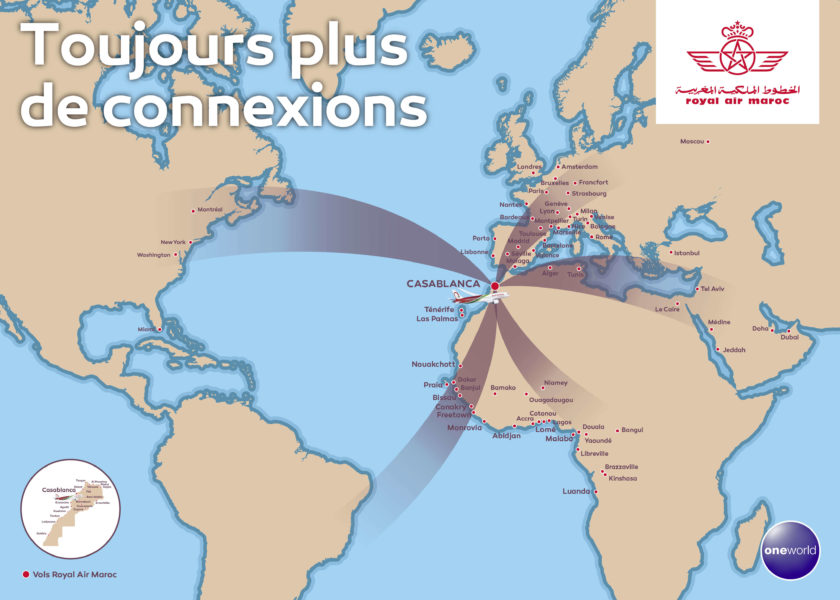
Morocco is now linked to 169 airports spread across 62 countries via 453 air routes, confirming the continued expansion of the kingdom’s international aviation network, according to data reported by La Vie Éco. The figures point to a sustained build-out of connectivity that has accelerated significantly over the past two decades.
The growth in routes reflects a broader surge in passenger traffic. Air traveller numbers through Moroccan airports have climbed from 6.5 million in 2006 to more than 36 million in 2025, a more than fivefold increase driven by a deliberate policy mix of aviation liberalization, infrastructure investment, and intensified competition among airlines.
Looking ahead, the kingdom has set an ambitious target for 2030 as it co-hosts the FIFA World Cup. To support that ambition, the country plans to extend six existing airports and build an entirely new airport in Casablanca, a project designed to substantially lift national capacity within the required timeframe.
Morocco’s transport minister highlighted the importance of inter-Arab cooperation as a lever for addressing structural challenges in the sector, framing aviation connectivity as an objective that benefits from coordinated regional engagement rather than purely national effort.
Alongside physical infrastructure expansion, Morocco is investing in digitalization and artificial intelligence to improve operational efficiency and elevate the passenger experience. The dual focus on capacity growth and technological modernization reflects an overarching ambition to position the kingdom as a leading aviation hub in Africa and the broader Mediterranean basin.