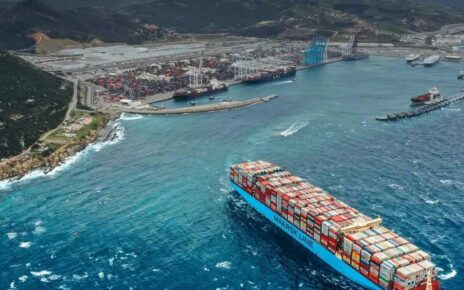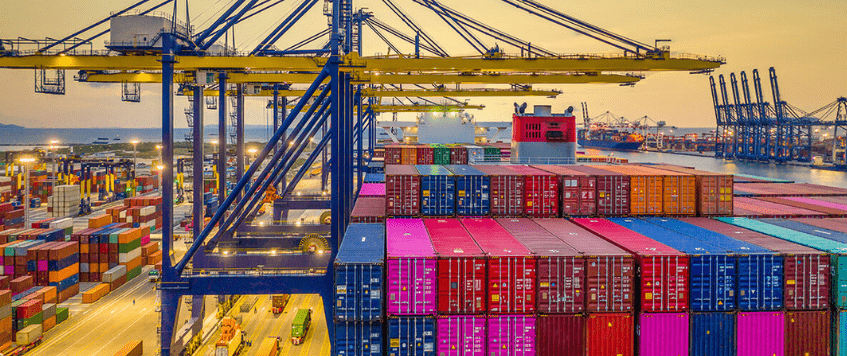
What professionals on the ground describe as the worst congestion episode in the history of the port of Casablanca is being resolved, as a series of emergency operational measures takes effect. Container ship processing times have fallen from between six and ten days to between 48 and 72 hours, according to data confirmed by both industry associations and independent maritime experts, reported news outlet leseco.ma. The turnaround follows a decision by the governor of the Casablanca-Anfa prefecture to shift the port to continuous 24-hour operations from 1 June, including the temporary daily opening of Gate 4 between midnight and 7 a.m. to relieve pressure on heavy goods vehicle traffic.
The improvement in conditions is reflected in vessel counts. As of 23 June, only five container ships were berthed at quay, three were in roadstead and one was in the process of departing, with 24 additional vessels expected between that date and 7 July. In total, 115 ships of all categories — container vessels, bulk carriers, roll-on/roll-off and conventional cargo ships — are scheduled to be handled by the port before the end of the first week of July.
Rachid Tahri, president of the Association des freight forwarders du Maroc (AFFM) and secretary general of the Transport Federation at the CGEM, confirmed to the news outlet the positive shift, and noted that the improvement is allowing operations to flow more freely and avoiding foreign currency losses associated with demurrage charges levied on vessels held beyond contracted unloading windows. For some bulk carriers, those charges were reaching several tens of thousands of dollars per day. Professor Najib Cherfaoui, a maritime expert, on his part, called the new turnaround speed a remarkable performance, while also contextualizing the original crisis: in his reading, congestion at Casablanca reflects Morocco’s growing weight on the global maritime map rather than a failure of port infrastructure.
The episode has nonetheless imposed meaningful economic costs. Importers and shipping lines have faced substantial demurrage penalties, and the disruption has propagated downstream through supply chains. Operators in the cereals sector signaled concerns about potential effects on food prices, while industrials dependent on imported raw materials reported delivery delays and inventory pressures. Moroccan exporters also flagged difficulties in meeting commercial commitments on time.
The H24 regime applies to all public administrations active within the port perimeter, as well as to all concessionaires and private operators. With conditions now improving, port professionals and logistics operators are using the episode to press for an acceleration of medium-term investment in port infrastructure and logistics capacity, arguing that Morocco’s repositioning as a maritime hub requires facilities capable of absorbing substantially larger and more frequent traffic volumes without disruption, leseco.ma stated.