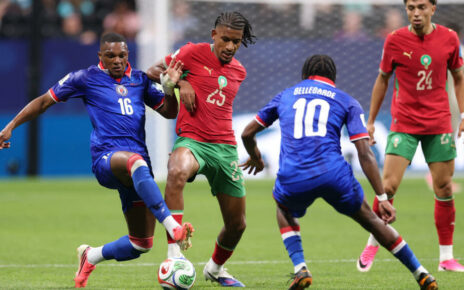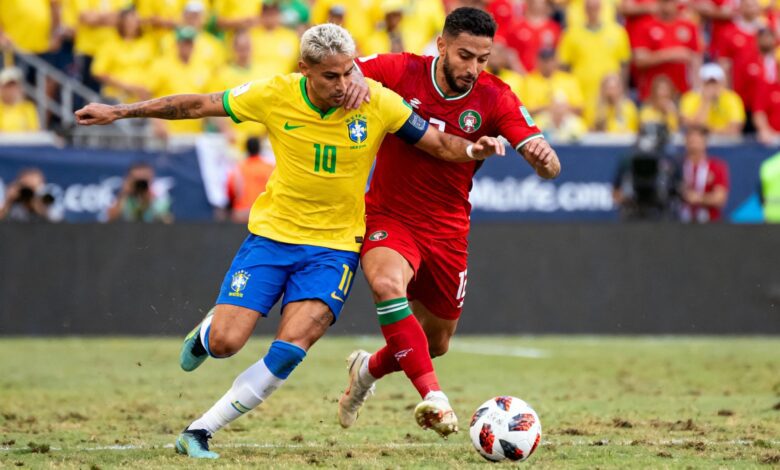
The success of Moroccan football is not fortuitous but the result of a royal strategy leading to a network of sprawling, modern soccer academies, including the Mohammed VI Football Academy tasked with developing domestic talent from a young age.
In a story published on the rise of Morocco into a global football powerhouse, the American New Yorker magazine said the Atlas Lions, who became in 2022 the first African and Arab team to reach the World Cup semifinals, are aiming to prove this summer they are more than an underdog story.
Four years ago, when Morocco reached the semifinals of the World Cup for the first time, the celebration stretched far beyond the country’s borders. The Atlas Lions were hailed as pan-Arab, pan-African, and post-colonial heroes, said the American magazine.
When history is made, observers like to define it. Morocco was just the third team from outside of Europe or South America to reach a World Cup final four, added the weekly.
Before Morocco’s success in 2022, the country had advanced from the World Cup’s opening-group stage only once, in 1986. Today, the squad enters the tournament ranked seventh in FIFA’s official standings, its highest-ever mark.
Morocco’s lineup features players from some of the world’s powerhouse clubs: Paris Saint-Germain, Real Madrid, Manchester United. Its youth team won the most recent Under-20 World Cup last year, said the magazine, noting that Morocco are no longer the underdog and their expectations have changed completely.
According to the New Yorker, Morocco is reaping the fruits of a strategic planning spearheaded by King Mohammed VI who set a football academy in 2009 with the aim of developing the sport at the national level, and the results were impressive.
The academy provides education as well as sporting development, with dedicated study spaces including ten classrooms. It also features a state-of-the-art sports medicine department ready to produce future professionals.
Each year, a hundred promising adolescent boys, scouted as young as six, are admitted to live and train at the facility full time, in a system that resembles top youth-development programs in Europe and South America.
Morocco’s investment in nurturing domestic talent has been its improved efforts to scout and court eligible international talent, often the descendants of emigrants who have learned the game in world-class competitive environs elsewhere, said the U.S. magazine, noting that Morocco success-story is an inspirational model for the global South.