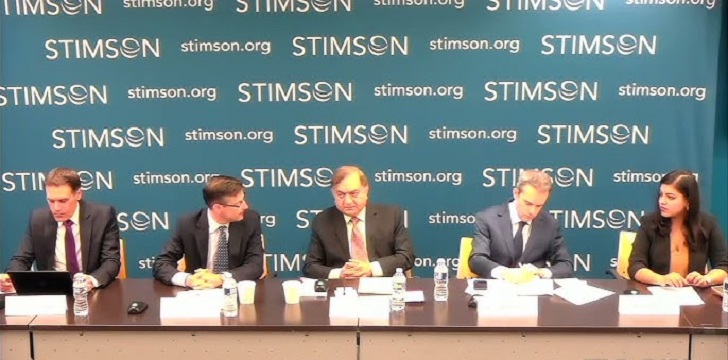
The Stimson Center has praised Morocco’s political and institutional progress, describing the kingdom as advancing along a “steady trajectory of reform” driven by gradual change and institutional stability.
In a recent assessment, the Washington-based think tank highlighted Morocco’s hybrid governance model combining a constitutional monarchy with a pluralist parliamentary system.
“Morocco operates a system that blends continuity with adaptation,” the report said, noting that reforms introduced under the 2011 constitution expanded the role of elected institutions while preserving stability at the top.
“Electoral outcomes in Morocco can produce significant political shifts,” it said, citing the 2021 elections that saw the Islamist PJD lose power to a coalition led by the National Rally of Independents (RNI). The current government was described as “aligned with a modernization agenda focused on economic reform and social protection.”
On governance, the report commended Morocco’s institutional framework to fight corruption. “Morocco’s anti-corruption architecture compares favorably with international benchmarks in design,” it said, pointing to bodies such as the National Authority for Integrity (INPPLC).
The Center also praised human rights reforms since the end of the so-called “years of lead.”
“Morocco has made tangible progress in expanding civil liberties and acknowledging past abuses,” the report said, citing the Equity and Reconciliation Commission and constitutional guarantees for free speech and assembly.
It described the country’s media landscape as “comparatively diverse within the region,” while noting that “limits persist on sensitive political issues.”
Women rights
Advances in women’s rights were highlighted as a major achievement. “Reforms to the family code and legal protections against violence represent meaningful steps forward,” the report said, adding that women’s growing presence in parliament signals “increasing institutional influence.”
Still, it cautioned that “economic participation remains structurally low and requires sustained policy attention.”
In education, the Center recognized “significant gains in access,” including near-universal primary enrollment, while stressing that “quality and learning outcomes remain key challenges.”
Ongoing reforms aimed at improving teacher training, expanding preschool and modernizing curricula were described as “important foundations for long-term competitiveness.”
“Morocco’s experience shows that reform in complex environments can be incremental yet meaningful,” it added.