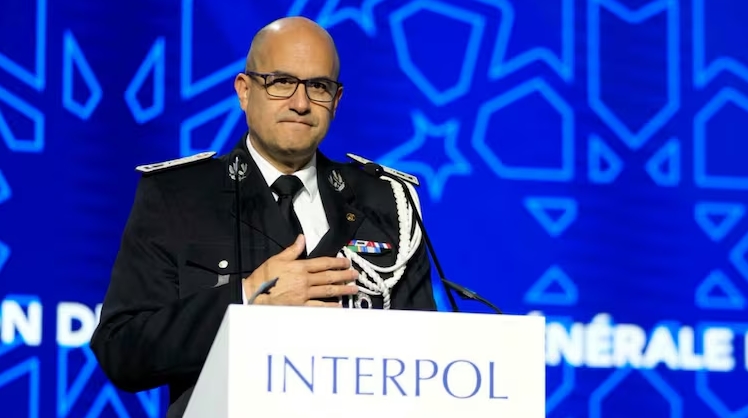
The 7th edition of the Open Days of the General Directorate of National Security (DGSN) kicked off on Sunday in Rabat, reflecting the DGSN’s firm commitment to strengthening its close ties with citizens.
The opening ceremony of these open days, which coincide with the 70th anniversary of the creation of the DGSN, was chaired by the Minister of the Interior, Abdelouafi Laftit, and the Director General of National Security and Territorial Surveillance, Abdellatif Hammouchi, and attended by several international personalities, including Interpol President Lucas Philippe, and Secretary General of the Arab Interior Ministers Council Mohammed Ben Ali Koman.
During the opening ceremony, Interpol President Lucas Philippe paid a vibrant tribute to Morocco’s national police institution, framing Morocco’s investment in its police force as a sovereign strategic choice made under King Mohammed VI — one covering operational capabilities, training, technology, and the working conditions of officers.
Lucas Philippe structured his remarks around a three-tiered definition of institutional prestige. “The standing of a police institution is measured at several levels,” he told the audience. “It begins inside, in the pride of those who serve it. It spreads outward to citizens, in the confidence it inspires. And it extends beyond borders, in the credibility it projects on the international stage.” He described the DGSN as engaged in a deep transformation of the police-citizen relationship that goes well beyond technology: improvements in reception services, responsiveness, continuity of service, and a culture of results and performance — a transformation that, he said, rests at every level on trust in the human dimension of policing.
Touching on the inauguration of the DGSN’s new headquarters, Philippe described the new building as crowning this institutional ambition — a genuine expression of confidence in the mission and professionalism of the police family. He noted that Interpol’s own Lyon headquarters is currently undergoing a major extension project driven by the same logic: that security deserves means, vision, and recognition commensurate with the missions entrusted to those who guarantee it.
This represents “a genuine mark of confidence in the mission and professionalism” of the police family.
“That is precisely what Interpol is all about,” he remarked, noting that the Organization has thrived for over 100 years thanks to “the unique unifying power of security.”
The President of Interpol also said he shares the DGSN’s conviction that this prominence is also shaped by the actual conditions under which police officers carry out their duties on a daily basis, noting that this is why the organization’s headquarters in Lyon is currently undergoing a major expansion project befitting the ambition it embodies.
“At Interpol, the vision is that a sense of belonging must be fostered not only at the national level, but also across borders,” he continued, noting that “our goal is ambitious: to create a genuine global police community, one comprising the 25 million police officers from the 196 member countries, brought together by a common mission: to protect and to forge stronger bonds, greater trust, and a shared sense of pride.”
Emphasizing the shared conviction that without security, there can be no stability, attractiveness, or trust and that there can be no security without strong, modern, and respected law enforcement agencies, he noted that “Morocco has understood this, and you are demonstrating it today.”
The DGSN’s Journées Portes Ouvertes coincides with the celebrating of the 70th anniversary of the National Police, which commemorates a long institutional legacy and reaffirms a modern, citizen-focused security approach.
The previous editions took place in Casablanca, Marrakech, Tangier, Fez, Agadir, and El Jadida. They have become an unmissable annual event for citizens wishing to interact directly with police officers and learn about the professions and work of the National Security services.
Established on May 16, 1956, shortly after Morocco’s independence, DGSN has evolved into one of the country’s central security institutions, responsible for maintaining public order, protecting citizens and property, and supporting national stability and has continued to adapt to evolving security challenges through digital transformation and expanded public engagement.