The restructuring of global trade flows triggered by escalating US tariff policy is generating a strategic opening for Morocco, but economists warn that geography alone will not be enough to capitalize on it. According to the World Trade Organization, global merchandise trade growth is projected to slow sharply to 0.5 percent in 2026, compared to 2.4 percent in 2025. This is not a cyclical dip but the beginning of a structural recomposition of international exchange, driven by the proliferation of trade barriers and the unraveling of the hyperglobalization model that shaped the previous three decades.
The central dynamic is the shift from ‘Global Sourcing’ to ‘Friend-shoring’ — a transition in which supply chain security is increasingly prioritized over pure cost optimization. US tariffs on Chinese goods have now reached 35 percent, making Chinese production significantly less competitive for companies serving American and European markets. Morocco, by contrast, has been assigned the 10 percent minimum tariff rate by the Trump administration — a relative advantage compared to regional competitors such as Tunisia at 28 percent and Algeria at 30 percent, and a far more favourable position than Asian manufacturing hubs facing tariffs of 30 to 49 percent.
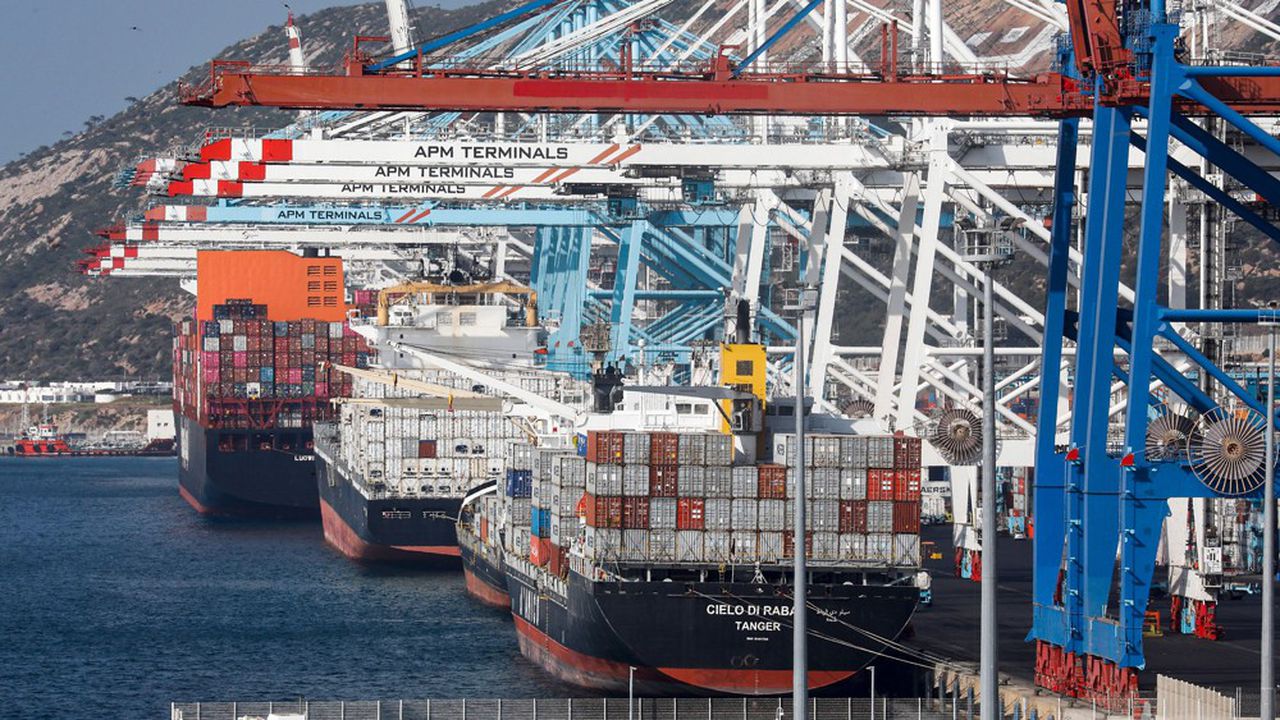
In this environment, Morocco’s combination of proximity to European markets, political stability and improving logistics infrastructure — led by Tanger Med as one of the world’s top container ports — creates a genuine nearshoring opportunity. Companies seeking to shorten supply chains and reduce geopolitical risk exposure have a logical candidate in the Kingdom for relocating or diversifying production closer to their end markets. Younès Ait Hmadouch, professor of financial economics at Ibn Tofail University, describes this, in a statement to news outlet leseco.ma, as a real and time-bound window that Morocco must treat with urgency.
However, Ait Hmadouch is clear that physical infrastructure is a necessary but insufficient condition. Morocco cannot content itself with a transit or processing function. The country must convert its geographical advantage into productive capacity — and specifically into decarbonized, high-value production that European buyers increasingly require as part of their own supply chain sustainability commitments. Without this upgrade, the nearshoring opportunity risks being captured by competitors or remaining structurally shallow.
The challenge is therefore one of anchoring value on Moroccan territory. This means addressing the persistent gap between the skills produced by Morocco’s education and vocational training systems and the requirements of advanced industrial sectors — a gap identified repeatedly in the World Bank’s recent $500 million employment program as a core structural constraint. Morocco is well-positioned by geography and macro-stability, but the window for transforming global disorder into lasting industrial growth will not remain open indefinitely.