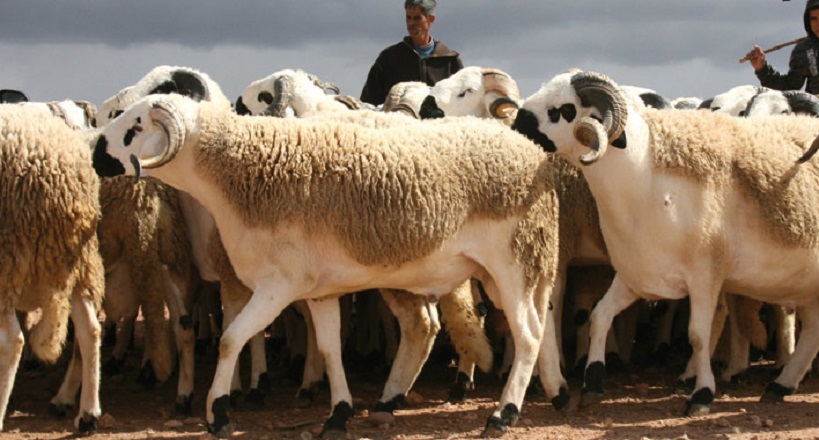
As Aïd Al-Adha 2026 approaches, a familiar disconnect is once again defining Morocco’s livestock market. Industry professionals are pointing to ample supply and more accessible prices, yet for millions of households already contending with strained purchasing power, the reality on the ground tells a different story. The gap between sector forecasts and consumer experience is increasingly difficult to ignore — and its origins lie less in any shortage of animals than in the enduring influence of commercial intermediaries known as the ‘chennaqa’.
The underlying supply data is unambiguous. Morocco’s national herd stands at approximately 32.8 million head, including more than 23 million sheep and some 7.5 million goats. Agricultural consultant Abdellah Boutchichi, accredited by the Ministry of Agriculture, estimates that available supply for this year’s sacrifice season could exceed 13 million head, against a national demand of roughly 6 million animals. This structural surplus would, in standard market logic, put downward pressure on prices. Yet urban markets continue to reflect elevated tariffs, often seemingly disconnected from these fundamentals.
Professionals have been candid about the source of the distortion. Between the farmer and the final buyer, multiple layers of intermediaries intervene, each adding a margin that compounds as the animal moves through the distribution chain. The more links in the chain, the higher the eventual price. This dynamic is especially pronounced in cities, where direct access to livestock markets — the ‘rahba’ — is limited, leaving urban consumers disproportionately dependent on intermediary networks.
Authorities have responded by encouraging the expansion of direct-sale livestock markets across the country. The ‘rahba’ model offers visible supply, competitive sellers and direct negotiation, providing a more transparent price-formation environment. Nevertheless, logistical and geographic barriers mean that many city dwellers continue to purchase through the very circuits that inflate prices. Structural improvements in distribution infrastructure remain a medium-term challenge.
Compounding the picture, despite improved pasture conditions following recent rainfall, structural cost pressures have not disappeared. Animal feed costs remain elevated, and the finishing phase for Aïd-destined animals requires specific inputs. Higher fuel prices meanwhile increase transport costs throughout the supply chain. Taken together, these factors sustain upward price pressure even amid a theoretical surplus — underscoring that unless distribution circuits are reformed, the promise of a more affordable Aïd Al-Adha may remain out of reach for many Moroccan families.