Morocco is undertaking one of its most ambitious water security transformations in decades, moving decisively away from a dam-dependent model toward a diversified mix of reservoirs, desalination plants, inter-basin transfers, and treated wastewater reuse — a strategy designed to insulate the country against the mounting unpredictability of rainfall.
Speaking at a recent debate in Rabat, Water and Equipment Minister Nizar Baraka laid out the scale of the effort. Morocco currently operates 156 large dams with a combined storage capacity of 20.8 billion cubic meters. Seven additional large dams have been commissioned since 2022, while 14 large and five medium dams are under construction, adding an estimated five billion cubic meters of capacity. Three further projects are to be launched this year, ultimately bringing national storage capacity to 25.8 billion cubic meters.
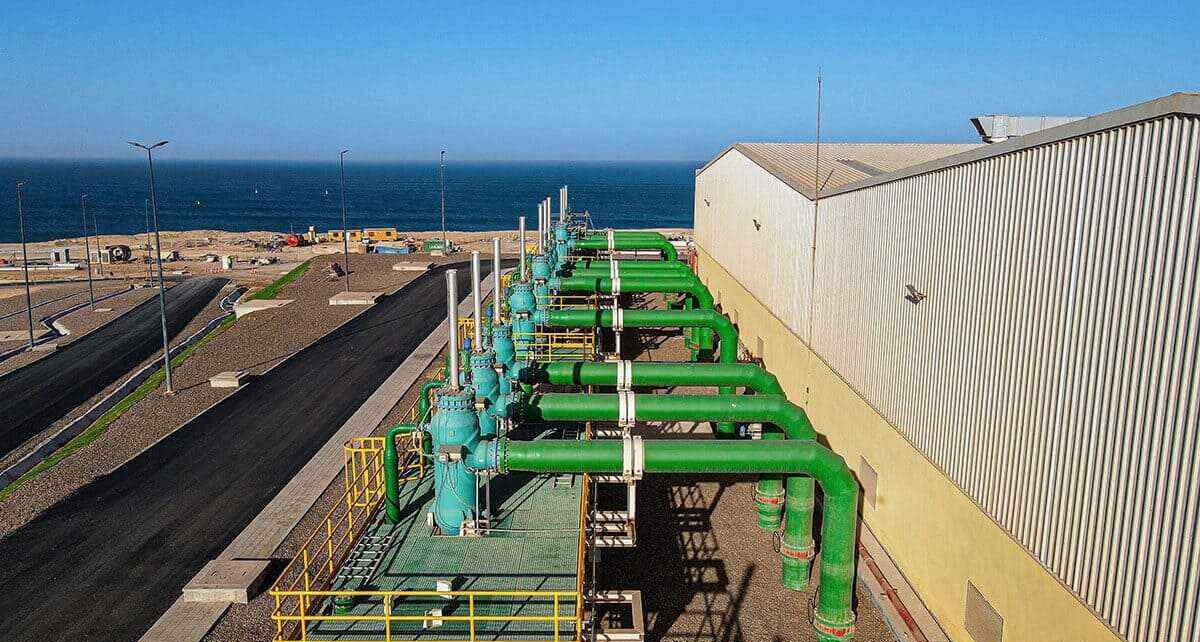
The consecutive drought years between 2018 and 2025 exposed the limits of relying on dams alone, accelerating the push for desalination. From roughly 40 million cubic meters produced annually in 2021, the country’s 17 operational desalination plants now yield 350 million cubic meters per year. The national target is to reach 1.7 billion cubic meters annually by 2030, with desalinated water eventually covering approximately 60 percent of domestic drinking needs and supplying 500 million cubic meters for agricultural irrigation — enough to water around 100,000 hectares.
Inter-basin water transfer infrastructure is equally central to the strategy. A pipeline already connecting the Sebou and Bouregreg river basins has transferred nearly 953 million cubic meters since August 2023, securing supply for the Rabat-Casablanca corridor at a construction cost of around six billion dirhams. A second phase extending the link to the Oum Er-Rbia basin is slated for launch by end-2026, covering approximately 210 kilometers with a transfer capacity of 1.2 billion cubic meters annually. A third phase, connecting the Laou, Loukkos, and Sebou basins in the north, is also being planned at comparable scale.
Treated wastewater reuse rounds out the framework. Fourteen cities now operate treatment plants producing 52 million cubic meters annually for irrigating green spaces and sports facilities. The target is to double that volume to 100 million cubic meters by 2027, freeing up conventional water resources for higher-priority uses across an increasingly water-stressed national territory.