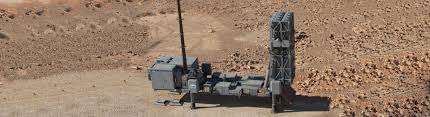
Morocco entered 2026 with a major leap in military modernization, activating the Barak MX air and missile defense system, a move that underscores Rabat’s deepening strategic partnership with Israel and its ambition to build a potent deterrent in an increasingly volatile region.
According to The Jerusalem Post and defense outlet Defense Post, the Barak MX system, developed by Israel Aerospace Industries (IAI), became fully operational in early January after satellite-based electronic signature analysis confirmed its deployment.
The $500 million deal, signed in 2022, included phased deliveries starting in 2023, marking what experts describe as “the most significant upgrade to Morocco’s air defense architecture in decades.”
Defense analyst Ali Bensaâd told Le Monde that the system offers Morocco “a multi-layered shield capable of intercepting drones, cruise missiles, and even ballistic threats at ranges up to 150 kilometers.”
This capability, he added, “represents a strategic rupture from previous, limited systems and positions Morocco among Africa’s most advanced militaries.”
The Barak MX rollout is part of a broader defense cooperation that accelerated after Rabat normalized ties with Tel Aviv under the Abraham Accords in December 2020. While economic and tourism links have drawn public attention, military collaboration has expanded quietly but decisively.
The partnership now spans high-tech arms acquisitions, joint training, and industrial ventures, including the recent inauguration of a factory in Benslimane to locally produce SpyX loitering munitions, developed by Israel’s BlueBird Aero Systems.
Beyond air defense, Morocco has invested in Israeli ISR (Intelligence, Surveillance, Reconnaissance) drones and acquired 36 Atmos 2000 self-propelled artillery units from Elbit Systems for roughly 1.9 billion dirhams, according to procurement disclosures cited by Defense Post.
These systems enhance mobility and precision in desert operations, complementing the layered air shield.
In 2026, Rabat and Tel Aviv signed an annual military action plan and established joint commissions to coordinate training and technology transfer. This formalization signals a long-term strategic alignment.
This strengthened cooperation comes at a critical chapter marked by regional instability and the proliferation of armed drones and loitering munitions.
By deploying Barak MX and integrating advanced ISR and strike capabilities, Rabat seeks not only to defend its airspace, including the southern provinces, but also to project a credible deterrent against asymmetric and conventional threats.