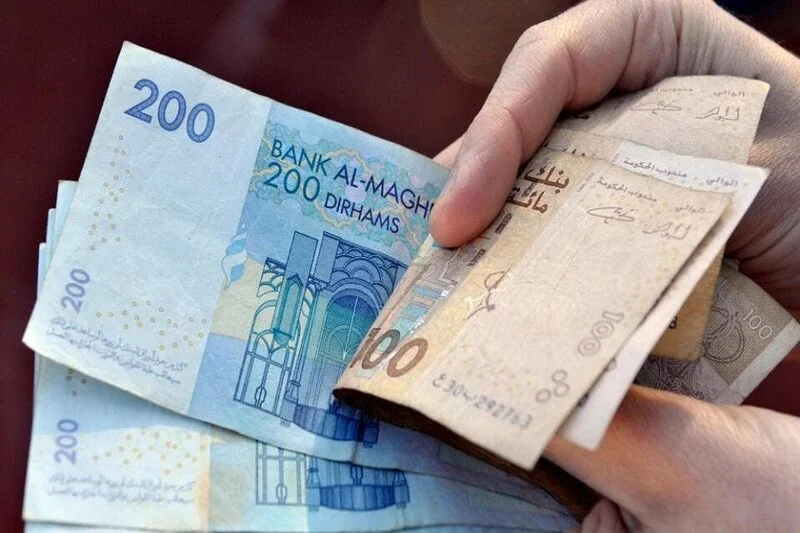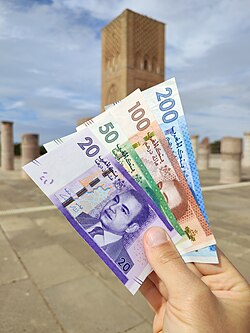
The Moroccan currency is increasingly used in markets across West Africa and the Sahel, marking a significant shift in a region that has long been anchored to the CFA franc, tied to the French central bank.
Although 14 African states still officially use the CFA franc, the Moroccan dirham has begun to circulate more widely as both a substitute and a complement, said the leading Middle East “Al Majalla” magazine.
Furthermore, a report by CNBC found that many African nations had expressed an interest in adopting the Moroccan currency for trade and transactions, in part owing to Morocco’s expanding economic partnerships and the broad presence of its banks, now operating in more than 30 countries, including Egypt, Tunisia, Senegal, and Côte d’Ivoire.
In less than two decades, the banking map of Sub-Saharan Africa has been redrawn. The large European groups that once dominated the market are gradually withdrawing, being replaced by groups from countries like Morocco.
Meanwhile, major Moroccan firms such as OCP Group are investing up to $9bn in major projects in Nigeria, Ethiopia, and Kenya to produce agricultural fertilizers. Official figures confirm a sharp increase in trade between Morocco and West African countries in recent years, accelerating the spread of the dirham in regional markets.
Besides, 54 Moroccan companies are operating in Sub-Saharan Africa in sectors such as telecoms, infrastructure, finance, insurance, tourism, real estate, agriculture, phosphates, mining, energy, and technology. This year, transactions reached $56bn, $39bn of which were from the private sector.
According to experts, the presence of three major Moroccan banking networks in 32 African countries has played a key role in facilitating the spread of the dirham. Yet this trend extends beyond financial considerations to include Morocco’s growing soft-power and solidarity-based south-south partnership.
However, the political and economic stability of African countries remains a challenge. Experts are wondering whether Morocco’s economy, reserves, and central bank can maintain the dirham’s value in the event of any shocks.
Now, the Moroccan Dirham is asserting itself beyond the Kingdom’s borders. In less than 20 years, the banking landscape of Sub-Saharan Africa has been transformed, with big European groups retreating, giving way to Moroccan banks to fill the vacuum, acquiring the legacy operations of Barclays, Standard Chartered, Société Générale, and BNP Paribas. According to traders, it looks like it is the dirham’s decade.