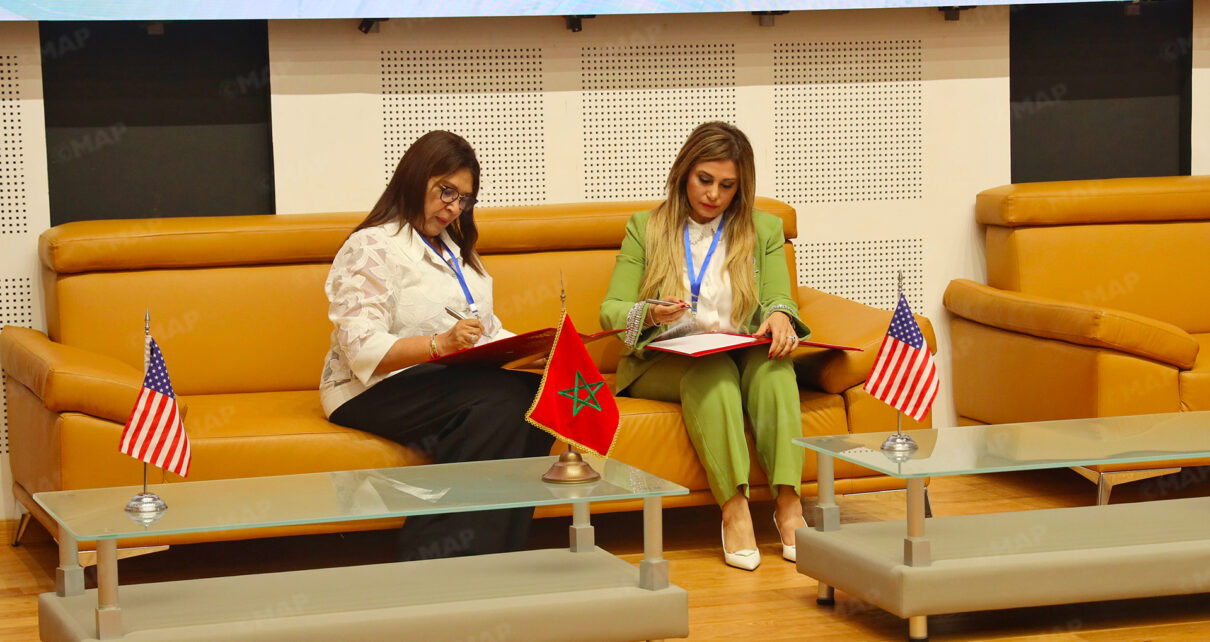
Laayoune’s Faculty of Medicine and Pharmacy signed two memoranda of understanding with American institutions on Thursday to strengthen academic cooperation between Morocco and the U.S. in medical training, scientific research and patient care.
The agreements were signed on the sidelines of the second Morocco-U.S. Medical Days, which bring together doctors, professors and researchers from both countries to discuss medical advances and ways to improve healthcare practices.
Susan Nassab, medical director of Celenova Fertility, which signed the first MoU, told MAP that the agreement covers the training and supervision of doctors and students, scientific research and improvements in patient care.
The partnership will focus on sharing therapeutic protocols and strategies, as well as strengthening the skills of doctors, students and medical residents, said Nassab, a specialist in obstetrics and gynecology and reproductive endocrinology.
She also highlighted the importance of fertility preservation, particularly for cancer patients, as well as treatments and interventions in reproductive medicine.
For his part, Pr. Boris Petrikovsky, representing the Fetal Research Fund, which signed the second agreement, said the MoU opens up new prospects for joint research between Morocco and the United States.
The American obstetrician-gynecologist noted that the findings of this research could be published in the Journal of Neonatal Care, an international journal focusing on neonatal health and on the diagnosis, management and prevention of related disorders.
For her part, Fatima Zahra Alaoui, dean of the Moroccan College, said the agreements with renowned American institutions would enable the institution to draw on specialized expertise, particularly in fetal and neonatal health, while contributing to the development of scientific research in Morocco.
Running until October 30, the event offers an opportunity to exchange expertise and explore the latest medical advances, with a particular focus on integrating artificial intelligence into clinical practice and improving the quality of healthcare