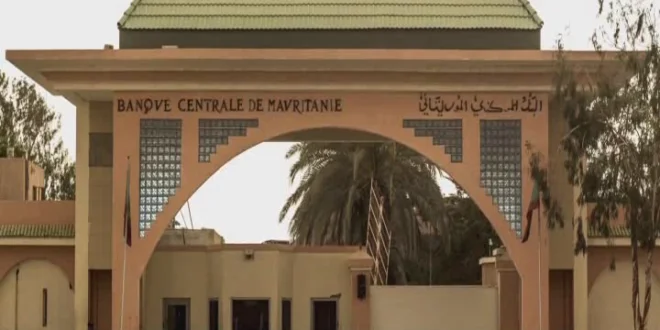
Mauritania’s economy recorded steady growth and improved macroeconomic stability in 2025, according to the Central Bank of Mauritania’s annual report published over the week-end.
The report said real Gross Domestic Product (GDP) expanded by 4% in 2025, following a 6.3% growth rate in 2024, despite global economic uncertainties and geopolitical tensions.
Inflation remained under control, averaging 1.6% in 2025 compared with 2.5% the previous year, while nominal GDP increased by 9.4% to 472.56 billion ouguiyas (MRU).
The Bank attributed the improved economic performance partly to the diversification of exports, including the start of natural gas shipments from the Grand Tortue Ahmeyim (GTA) project. Exports rose by 12.3% to nearly $4.3 billion, including $237 million from initial gas sales. The development helped reduce Mauritania’s trade deficit from $497 million in 2024 to $23 million in 2025, while foreign exchange reserves increased by 12.6% to $2.21 billion.
The report also highlighted improvements in public finances, with the budget deficit falling by more than 75% to 1.4 billion MRU from 5.85 billion MRU in 2024. External debt stood at $4.27 billion, but its share of GDP declined to 37%, indicating improved debt sustainability. The financial sector also recorded growth, with banking assets increasing by 17.7% to 218.5 billion MRU, while access to financial services rose to 55% in 2025 from 45.25% a year earlier.
The BCM said reforms in financial inclusion, banking sector development and foreign exchange market expansion were strengthening the country’s economic resilience. The central bank recorded a net profit of 3.18 billion MRU in 2025, bringing its equity to 15.29 billion MRU, which it said would support its role in maintaining monetary and financial stability.
The report concluded that while economic growth slowed compared with 2024, Mauritania had strengthened its economic foundations through inflation control, improved public finances, export diversification and financial sector reforms.