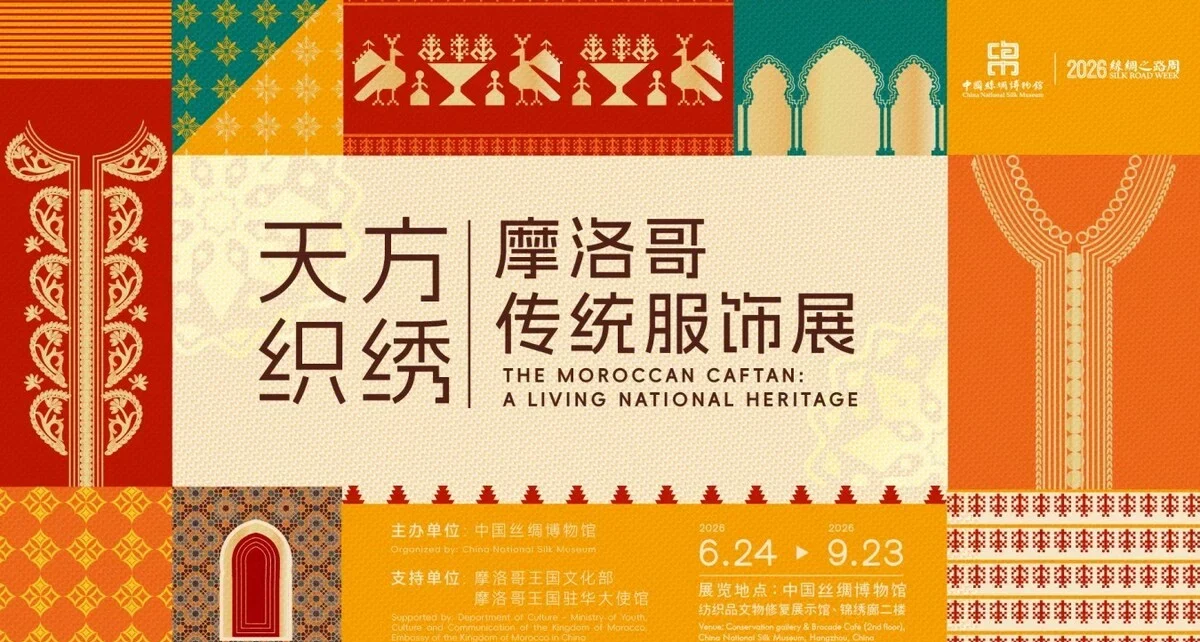
The China National Silk Museum is hosting “The Moroccan Caftan: A Living National Heritage” exhibition from June 24 to September 23. The event, organized by the Moroccan Ministry of Culture and the Moroccan Embassy in China, is the most comprehensive showcase of Moroccan sartorial art ever held in China.
Situated at the crossroads of Africa, the Arab world and Europe, Morocco has long been a melting pot of civilizations, nurturing a remarkably rich and diverse sartorial heritage. At the heart of this tradition lies the caftan, a ceremonial garment that embodies not only social etiquette and collective memory but also generations of exquisite craftsmanship, including weaving, embroidery, braiding and beadwork.
In 2025, the UNESCO recognized the Moroccan Caftan, Arts, Tradition, and Craftsmanship as Intangible Cultural Heritage of Humanity, becoming a global cultural treasure.
The Moroccan Caftan exhibition at China National Silk Museum sheds light on the evolution of traditional Moroccan dress while illustrating the aesthetic sensibilities, social customs, and cultural identities embedded in each garment. The show features an impressive array of traditional caftans and accompanying accessories sourced from Fez, Rabat, Tetouan, Oujda and other historic regions, complemented by archival photographs, multimedia installations and hands-on craft demonstrations.
Special attention is given to the intricate techniques behind caftan making — from lace and laâqad to silk braiding, tnbat and the renowned sfifa (a form of decorative metallic braid). It showcases diverse regional embroidery styles, revealing the distinctive handiwork passed down through generations of Moroccan artisans.
Special focus is placed on Morocco’s luxurious bridal traditions, wedding caftans and takchita (layered wedding gowns) that reflect the deep connections between dress, life-cycle rituals, family heritage and communal identity.