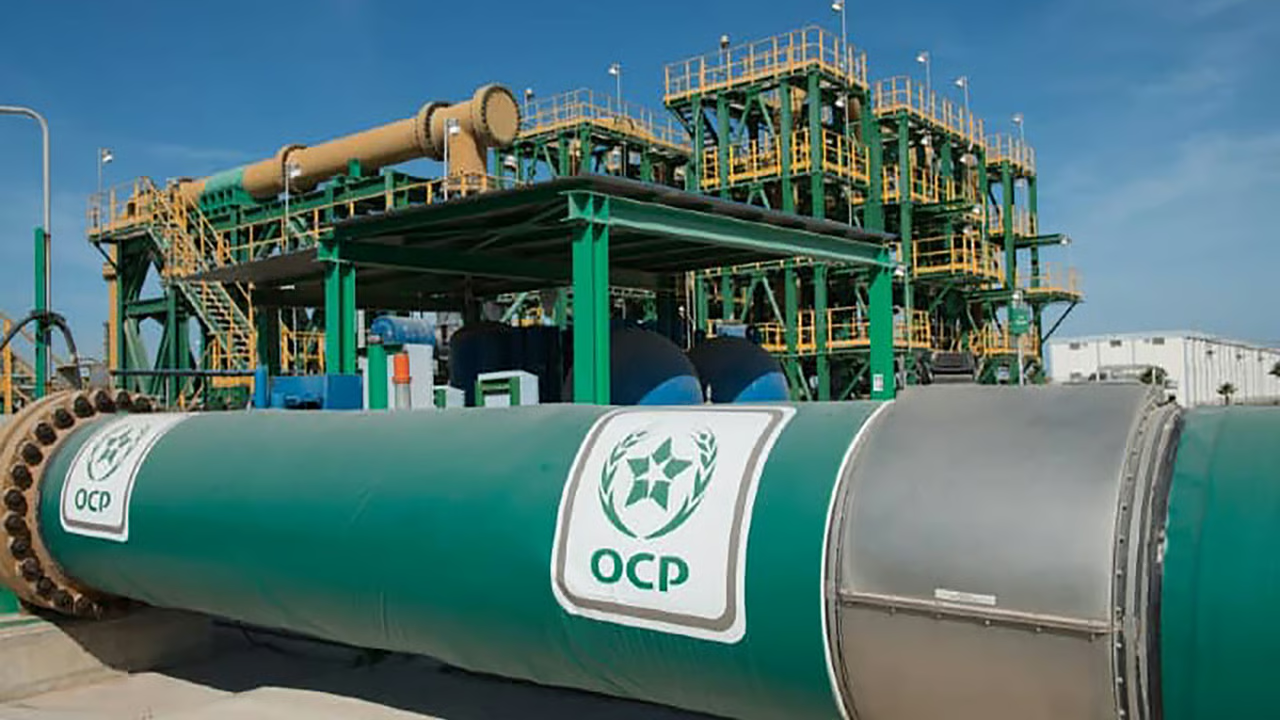
Morocco’s OCP Group has decided to restore its fertilizer production to 100 percent of capacity by the end of June 2026, reversing a managed reduction of around 30 percent that the group implemented in response to a severe global sulphur supply crisis. The decision, confirmed to Médias24 in an exclusive interview with three senior OCP executives, represents an offensive pivot at a moment when most of the group’s international competitors have been forced to curtail or halt their own output entirely.
The crisis originated with the Strait of Hormuz. Sulphur — essential for producing the sulphuric acid that underpins phosphate fertilizer manufacturing — has roughly 50 percent of its global supply transiting through that corridor. As geopolitical tensions between Iran and the United States mounted, global sulphur flows were effectively paralyzed, driving the price from 500 to 1,400 dollars per ton in a matter of weeks. Simultaneously, China banned exports of sulphuric acid until late August and Ukrainian strikes on Russian infrastructure blocked both Russian sulphur exports and Kazakhstan’s transit routes. Meanwhile, agricultural commodity prices fell sharply and Brazilian farmers deferred fertilizer purchases as credit tightened.
OCP’s management response was to bring forward scheduled maintenance windows and reduce production rather than accumulate high-cost sulphur inventories. The calculus changed in late May when several signals converged: Brazil and India are entering peak application seasons; stock levels in importing countries are low; and European governments have begun announcing plans to build strategic fertilizer reserves comparable to oil and gas stockpiles. Group executives described Morocco as being perceived internationally as the guarantor of global food security.
The competitive gap that opened during the crisis is substantial. American producer Mosaic cut capacity by 50 percent at multiple sites; Brazilian manufacturers halted entirely because sulphur at 1,400 dollars per ton eliminated their margins. OCP’s cost leadership — derived from the chemical properties and extraction economics of Moroccan phosphate rock, not from fossil fuel inputs — means the group can absorb elevated sulphur prices and still generate margins. The crisis has also accelerated a strategic product pivot: Triple Superphosphate, which uses 30 to 50 percent less sulphur per unit than standard formulations, has risen from 30 to 65 percent of OCP’s sales portfolio as farmers respond to elevated nitrogen prices.
Beyond the immediate disruption, OCP executives presented the crisis as consistent with the group’s longer-term transformation. The company is advancing extraction of uranium, fluorine, vanadium, and rare earth elements present in Moroccan phosphate rock, with pilot units already operational. Recovery of sulphur from phosphogypsum — a previously neglected by-product generated at a ratio of five tons for every ton of phosphoric acid produced — is now a strategic priority. The group confirmed that 2026 revenues are expected to exceed 2025 levels, and that the long-term target of 35 million tons of fertilizer production capacity by 2035 remains unchanged.