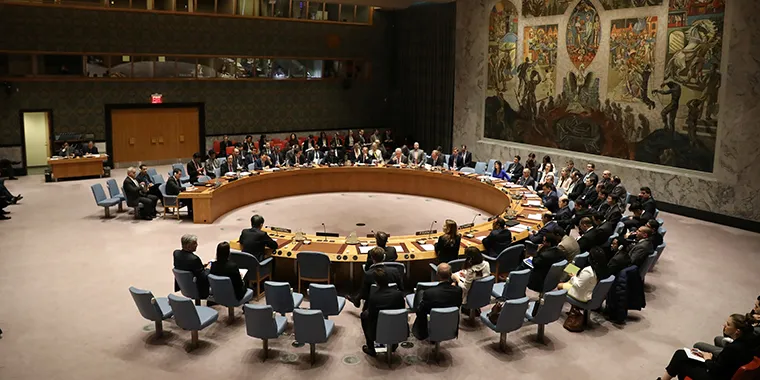
The election of five new non-permanent members to the United Nations Security Council for the 2027-2028 term is expected to reinforce Morocco’s diplomatic position on the Sahara issue, although some reservations remain, analysts say.
Austria, Portugal, Kyrgyzstan, Zimbabwe and Trinidad and Tobago will join the Council on January 1, 2027, replacing Denmark, Greece, Pakistan, Panama and Somalia, following a vote by the UN General Assembly last week.
The reshuffle comes as the Sahara dispute remains an item on the Council’s agenda, the body being the sole UN organ responsible for overseeing the political process and adopting resolutions on the conflict.
According to former Moroccan ambassador Ahmed Faouzi- speaking to Medias24- the incoming composition appears “globally favorable” to Rabat’s stance, which is anchored in garnering more support for the autonomy under Moroccan sovereignty as a sole solution to the conflict.
Two of the new members, Austria and Portugal, are considered the closest to Morocco’s position, having expressed support for the autonomy initiative as a credible basis for a negotiated solution.
Kyrgyzstan’s diplomatic posture is also seen as broadly aligned with UN parameters, emphasizing the need for a “mutually acceptable political solution,” consistent with successive Security Council resolutions.
However, analysts point to Zimbabwe as a potential outlier. The southern African country is viewed as maintaining an ideological alignment with Algeria, the main backer of the separatist Polisario militia.
Still, its influence is expected to remain limited, particularly following Algeria’s departure from the Council at the end of 2025.
More broadly, the composition of the 15-member Council means that ultimate decisions continue to depend largely on the positions of major powers.
The United States, France and the United Kingdom have in recent years expressed support for Moroccan sovereignty over the Sahara. Russia and China maintain more cautious stances, often abstaining in key votes.
This evolving balance has already been reflected in Resolution 2797, adopted in October 2025, which reaffirmed the autonomy initiative as a the “most feasible” basis for negotiations and renewed the mandate of the UN peacekeeping mission MINURSO.