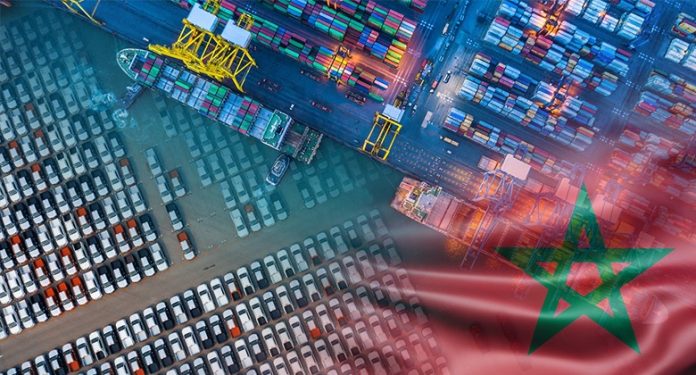
Morocco has surpassed South Africa to become the continent’s leading industrial economy, according to the Africa Industrialization Index 2025 (AII) released by the African Development Bank , alongside the very first Africa Industrial Investment Barometer (AfIIB), developed by WITBA Invest SA in partnership with Trendeo, during a panel organized on the sidelines of the AfDB Annual Meetings, held in Brazzaville, Republic of the Congo, May 25-29.
The designation, based on an evaluation of industrial development across 54 African countries over the 2010-2024 period, reflects what the Bank describes as Morocco’s sustained industrial upgrading, export diversification, and vigorous industrial policy — a combination that no other African economy has produced at the same scale and consistency.
The AII 2025 and the AfIIB reports provide the most detailed picture yet of which countries are industrializing fastest, which are attracting investment at scale, and how much of the value generated by that investment is being retained on the continent. Their shared diagnosis is sobering at the aggregate level: Africa accounts for less than 2 percent of global manufacturing output and only 1.4 percent of global manufactured exports, while manufacturing value-added per capita has fallen below 2014 levels.
At the same time, 41 of the 54 countries evaluated improved their industrialization score over the period, with continental performance advancing 6 percent overall. The gains were largest among previously underperforming economies, suggesting a degree of convergence. North Africa and Southern Africa dominate production and export sophistication, and the AfIIB shows North Africa capturing 56 percent of cumulative continental industrial investment between 2020 and 2025, with Morocco and Egypt leading the field.
Both reports identify a persistent structural weakness: intra-African trade represents only 14.4 percent of the continent’s total trade volume, reflecting weak regional production linkages and fragmented industrial ecosystems. The call to action is clear: moving beyond tariff reductions toward functional economic corridors, quality infrastructure, and harmonized standards — all anchored within the African Continental Free Trade Area framework — is the most consequential reform Africa’s industrial policymakers can make.
The AfIIB also delivers an urgent decarbonation warning: African industries must begin greening their processes now to avoid being structurally penalized by carbon border adjustment mechanisms that Europe and the United States are progressively rolling out over the next decade.
For Morocco, which has already seen its CBAM exposure become a live operational question for exporters, this warning arrives at a moment of acute relevance. The Bank’s Annual Assemblies 2026 run until May 29 under the theme of mobilizing resources at scale for African development financing in a fragmented world.