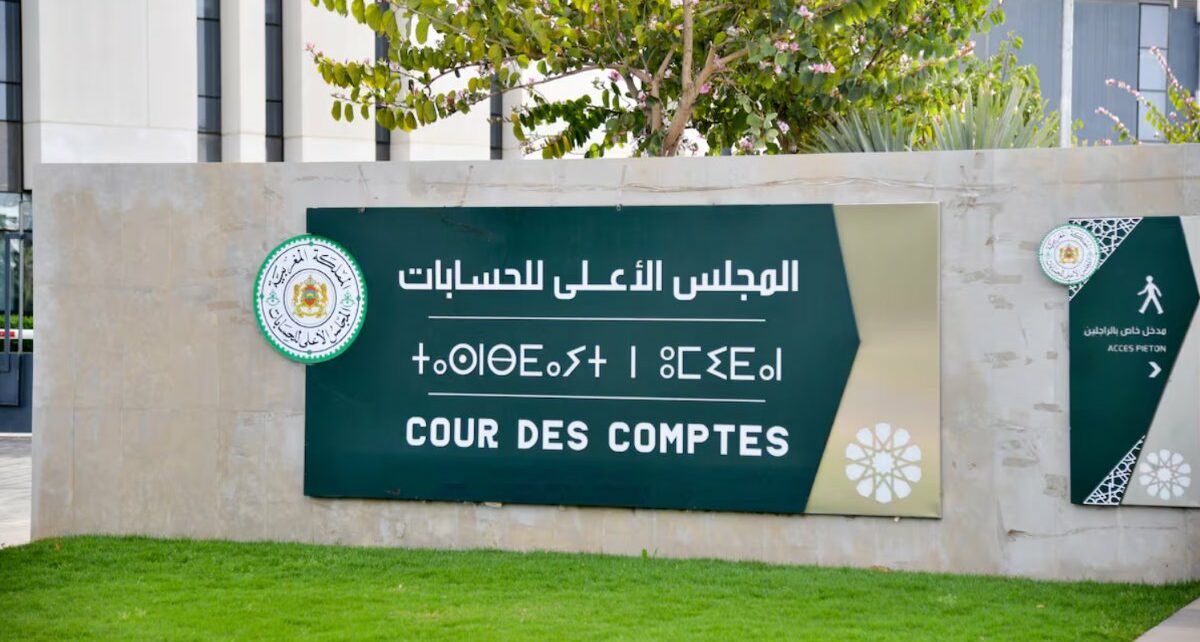
Morocco’s Court of Auditors, under the leadership of President Zineb El Adaoui, has significantly intensified its scrutiny of public procurement practices at the territorial level, with ongoing investigations now covering multiple regions including Casablanca-Settat, Rabat-Salé-Kénitra, and Marrakech-Safi. The investigations were triggered following the transmission of control data from inspection missions conducted by the Court’s magistrates at public enterprises and institutions, where a series of suspicion indicators were activated.
Among the most serious patterns identified are the award of contracts to abnormally low bids — in some cases more than 25 percent below the estimated average price — without the transparency and justification requirements being met. Investigators have flagged these practices as raising suspicions of collusion between elected officials and contractors. In several instances, entrepreneurs reported being subjected to pressure by elected representatives to submit joint bids with companies of the officials’ choosing, a practice consistent with organized bid-rigging.
The audits have also exposed systemic weaknesses in project planning and execution. Multiple projects were launched without prior technical studies, compromising construction quality and generating significant financial losses for local budgets. The absence of economic and financial impact assessments led to unforeseen cost overruns and uncertain long-term returns. In parallel, a chronic lack of technical competence among municipal staff responsible for supervising works — particularly in civil engineering, public works, and technology procurement — has meant that contractor shortcomings go undetected until they become irreversible.
A recurring pattern concerns fictitious tender processes, in which public procurement calls are structured to guarantee outcomes for pre-selected companies. This practice involves the manipulation of technical specifications to fit a single supplier, the deliberate exclusion of competing bids through procedural obstacles, and the creation of artificial urgency to bypass competitive evaluation requirements. These mechanisms have been described by investigators as “well-oiled systems, often protected by internal complicity.”
The intensification of the Court’s investigative activity in 2026 follows the publication of its latest annual report in January, which covered the 2024-2025 period and provided a comprehensive overview of public financial management across state institutions and regional bodies. The findings align with a broader institutional push under El Adaoui’s leadership to transform the Court from a largely reactive auditing body into a proactive accountability institution with visible enforcement consequences. Whether the current investigations translate into formal judicial referrals and prosecutions remains the key test of their ultimate impact.