2025 has been a busy year in Morocco. It is marked by milestone achievements in diplomacy, football, defense industry and socioeconomic development, strengthening the Kingdom’s soft-power.
It will be remembered for the generations to come as the year of Morocco’s historic victory at the UN Security Council which endorsed the Autonomy plan under the Kingdom’s sovereignty, an endorsement widely seen as international recognition of the Moroccanness of the Sahara.
On the evening of 31 October, Morocco erupted in celebration from Tangier to Lagouira following adoption by the UN Security Council of resolution 2797 which “opened a new chapter in the process of consolidating the Moroccanness of the Sahara, and closing, once and for all, this fabricated conflict, within the framework of a consensual solution based on the Autonomy Initiative,” said King Mohammed VI in a speech he delivered after the UNSC vote.
This historic shift, to reshape North Africa’s political dynamics, coincided with the commemoration of the 50th anniversary of the Green March, and the 70th anniversary of Morocco’s independence.
Few weeks after Morocco’s UN diplomatic victory, the Moroccan national football team won the 2025 FIFA Arab Cup held in Qatar. Morocco’s historic performance run to the 2022 World Cup semi-finals was a first for any African or Arab country and the nation further cemented its rising status by winning the Under-20 World Cup held in Chile.
Morocco also shined on the African football scene. The Kingdom’s U-17 team gained the U-17 Africa Cup of Nations and the locally-based senior team won the African Nations Championship (CHAN), confirming the rise of the Moroccan football under the leadership of King Mohammed VI.
Currently, Morocco is hosting the 2025 Africa Cup of Nations gathering 24 teams in nine new or renovated stadiums in six cities under very challenging weather conditions. Despite heavy rainfalls, Morocco’s pitches remain in very good shape. No waterlogging, no muddy patches, and no disruption to the quality of football, prompting the fans and experts’ praise worldwide.
Morocco has raised the bar very high with the deployment of an advanced drainage systems combined with the use of hybrid turf and advanced SubAir technology in its stadiums to host the FIFA World Cup 2030 along with Spain and Portugal.
But the rise of the Kingdom of football is also driven by the country’s political stability, economic performance, sustainable growth and competitive industrial manufacturing, attracting a growing foreign investment.
In 2025, Morocco tops Africa’s Stability-Attractiveness Index for its consistent strong institutions, predictable regulation, and economic openness, driven by industrial growth, renewable energy, and infrastructure, making it an attractive investment hub despite global uncertainties.
Morocco, which is not fossil fuel exporter, has invested heavily in solar, wind, and hydropower, as well as, more recently, green hydrogen. The country now ranks among Africa’s top five producers of renewable energy. The Kingdom is using renewables to compete in the energy landscape and is capitalizing on its strategic geographic position and economic dynamism to attract investors.
This year, Morocco ranks among the highest performers in the Climate Change Performance Index. The country receives a high rating in GHG emissions, energy use, and climate policy, and a low in renewable energy. Major public transport and rail investments in Morocco are supporting transition to low-carbon mobility in line with the country’s commitment to produce 53 pc of its electricity from renewables.
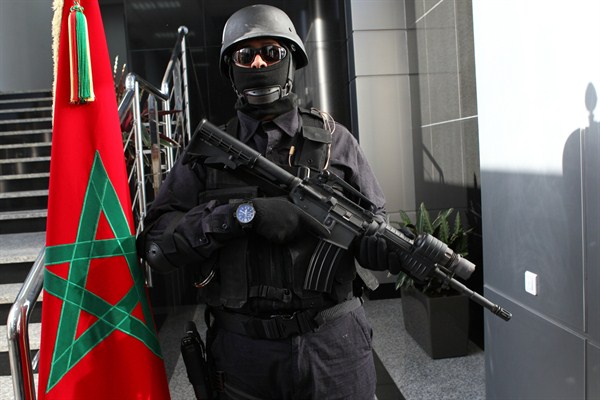
To reduce its dependence on foreign weapons purchases and strengthen its military capabilities to counter threats to its national security, Morocco’s defense industry is gaining momentum with the delivery to the Moroccan Army the first set of WhAP 8×8 armoured vehicles produced locally by India’s Tata Advanced Systems.
Emboldened by the success of the combat armoured vehicles (Made in Morocco), the North African Kingdom is now looking forward to producing tanks. In the drone industry, Morocco has attracted Turkish Baykar and Israeli BlueBird Aero Systems to produce locally military unmanned aerial vehicles (UAVs).
These strategic projects help to create job opportunities and support the growth of Moroccan economy. Several defense companies from the U.S., Europe, Latin America and Asia have shown interests in the huge investment opportunities offered by Morocco which is developing its military industry clusters building on its success in the automotive and aeronautics sectors.
By attracting key defense production, Morocco strengthens its own defense logistics and its strategic flexibility across the Maghreb and Sahel, while contributing to African peacekeeping and security operations.
According to experts, Morocco is set to become Africa’s benchmark for defense-industrial governance by 2030—transforming its defence policy from procurement dependency to strategic autonomy and export capability.
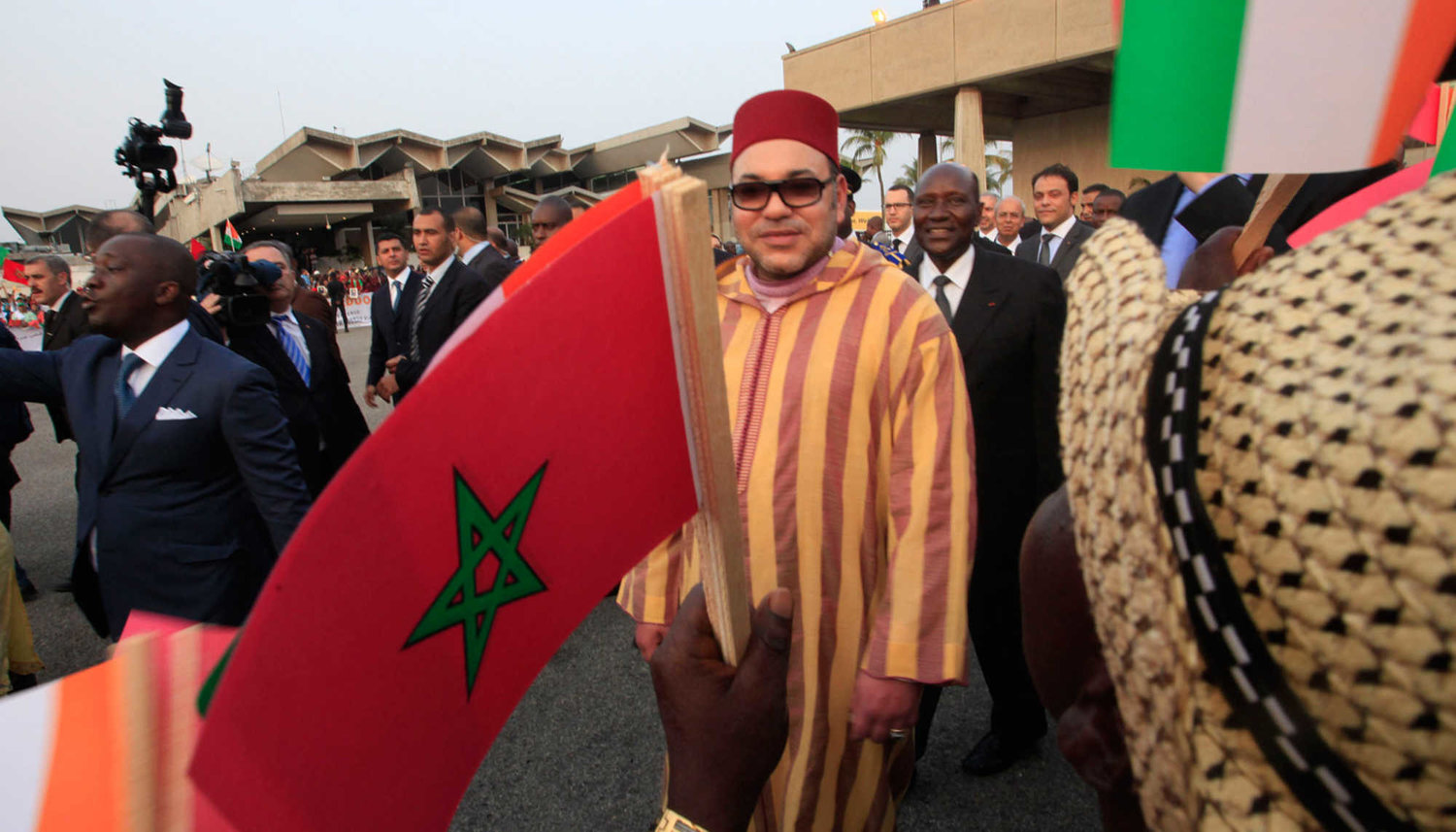
Meanwhile, King Mohammed VI continues driving the train of big political, economic and social achievements.