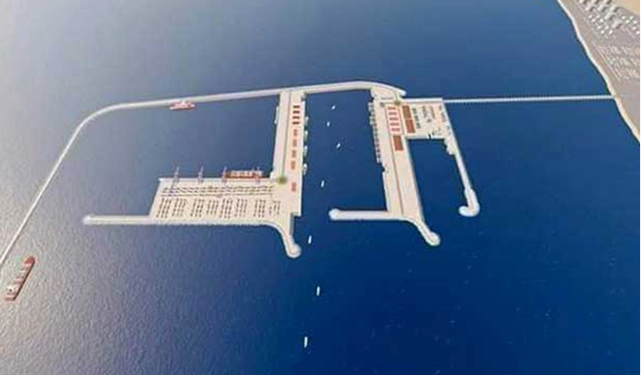
Morocco’s Dakhla Atlantic Port, now 45% complete, is emerging as a cornerstone of the country’s strategy to integrate its southern provinces into global trade and energy networks, with completion targeted for early 2029.
Located 40 kilometers north of the city of Dakhla in the Oued Eddahab region, the port is part of King Mohammed VI’s New Development Model for the Southern Provinces.
The $1.2 billion megaproject is designed to serve as a gateway for trade between Europe, West Africa, and the Americas, and to support Morocco’s ambitions in green hydrogen exports.
The port will include a commercial terminal, fishing port, shipyard, and logistics zones. It is expected to handle up to 35 million tonnes of cargo annually and accommodate one million containers per year.
The port is central to the Royal Atlantic Initiative, which aims to connect landlocked African nations to global markets.
The port’s strategic location also positions it as a competitor to established transshipment hubs in the Canary Islands. Analysts say Dakhla’s modern infrastructure and proximity to emerging African markets could attract shipping lines seeking lower costs and streamlined logistics.
Beyond trade, the port is expected to play a key role in Morocco’s green energy strategy. A $27 billion green hydrogen project led by TAQA Morocco is underway in the region, aiming to produce and export clean fuels to Europe.