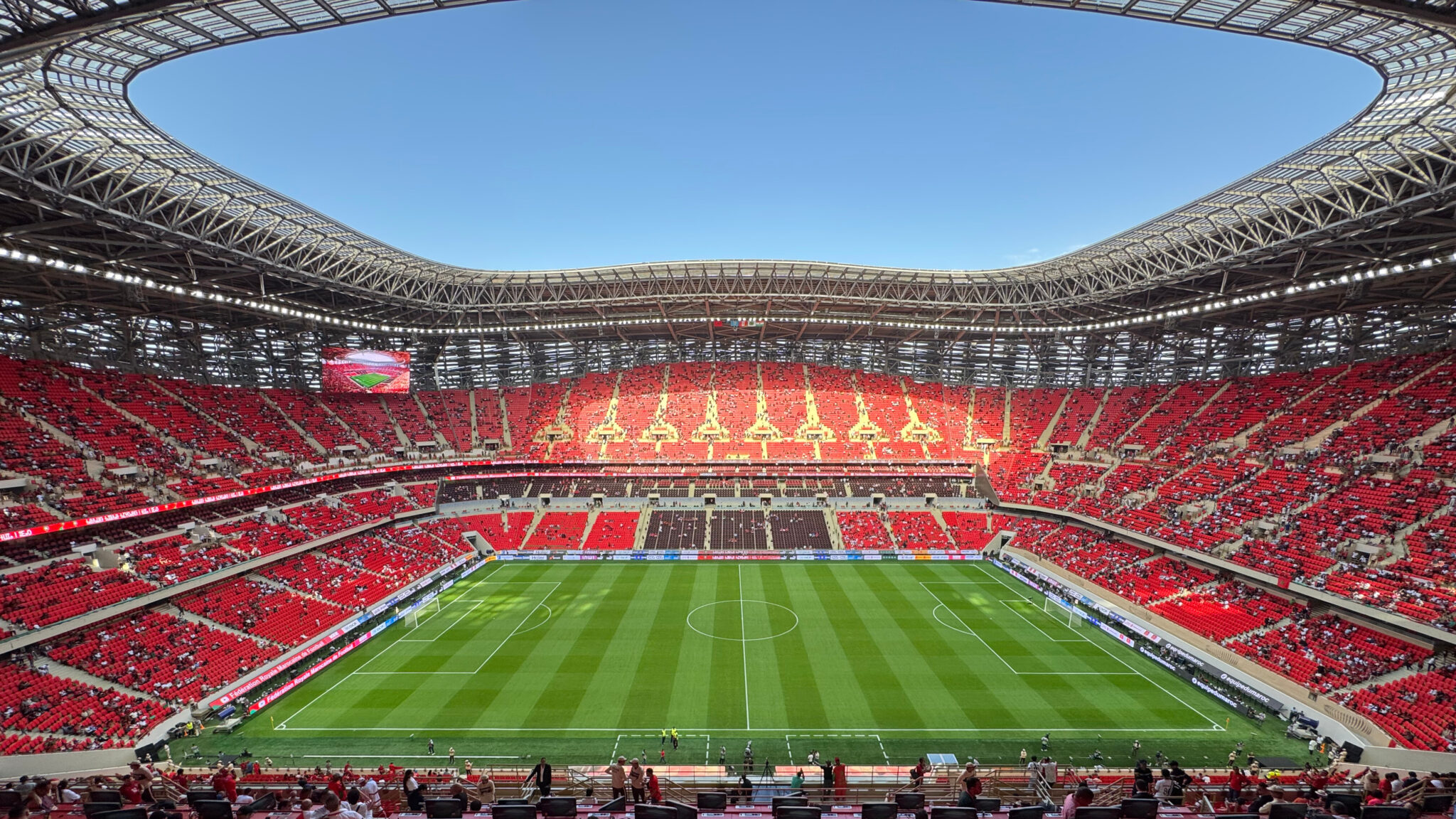
Beyond the reopening of Moulay Abdellah stadium in Rabat last week, the event marked a milestone in Morocco’s infrastructural transformation, positioning the stadium as a flagship of national engineering, labor excellence, and global sporting ambition.
The stadium, rebuilt in fourteen months after the demolition of its 1983 predecessor, now stands as Africa’s most advanced sports venues. With a capacity of 68,700 seats, it features a hybrid natural-synthetic pitch, the first of its kind on the continent, alongside smart crowd management systems, solar-powered infrastructure, and underground parking for over 5,000 vehicles.
Designed by Moroccan firm Orange Atelier in partnership with global architecture giant Populous, the stadium’s façade draws inspiration from traditional Moroccan motifs, blending heritage with modernity.
The complex also includes Olympic swimming pools, training pitches, and a covered arena, making it a multi-use facility for sports and cultural events.
The stadium’s rapid completion was made possible by a massive mobilization of Moroccan labor, underscoring the capacity and flexibility of Morocco’s construction sector.
Crown Prince Moulay El Hassan personally inaugurated the venue, greeting the workers and technicians involved in the project, a gesture that highlighted the human effort behind the architectural achievement.
The stadium is a strategic asset in Morocco’s broader plan to host the 2025 AFCON and co-host the 2030 FIFA World Cup with Spain and Portugal. Rabat alone will feature four modern stadiums for AFCON, including the newly rebuilt Moulay El Hassan and Al Barid stadiums, reflecting the capital’s central role in Morocco’s sports infrastructure strategy.
As the Atlas Lions dazzled on the pitch, scoring five goals in front of a sold-out crowd that rejoiced at the country’s qualification to the 2026 World Cup, the stadium itself stood as the evening’s true protagonist and a testament to Moroccan ambition, craftsmanship, and the power of sport to unite and inspire.