Morocco took part in the proceedings of the 31st session of the Conference of the States Parties to the Chemical Weapons Convention, held in The Hague November 23-27.
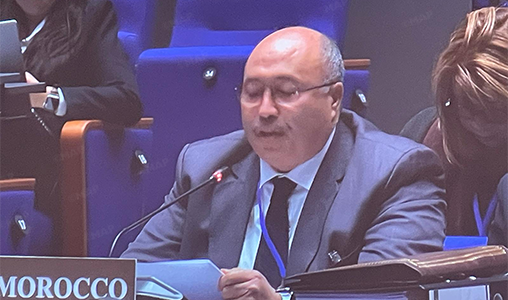
The Moroccan delegation, led by Permanent Representative to the Organization for the Prohibition of Chemical Weapons (OPCW), Mohamed Basri, included representatives of the national departments involved in implementing the Chemical Weapons Convention at the national level.
The annual Conference of the States Parties, held in The Hague, primarily aims to assess the status of the Convention’s implementation worldwide and set the OPCW’s priorities for the coming years, particularly with regard to organizational and governance matters, the operating budget, the verification regime, as well as training and capacity-building.
During this session, Morocco, representing the African Group, was re-elected by acclamation as a member of the OPCW Executive Council for the 2027-2029 term.
The session adopted a decision on the establishment of a network of designated laboratories for biotoxin testing, as well as the Organization’s 2027 biennial program and budget.
It also addressed the usual agenda items, including measures to counter the resurgence of the chemical threat and emerging technologies, particularly those based on artificial intelligence.
During the general debate, Morocco’s Permanent Representative reiterated the Kingdom’s principled position, strong commitment and unwavering dedication to the objectives of disarmament, non-proliferation and the fight against weapons of mass destruction, while reaffirming its steadfast support for the noble principles and objectives of the Chemical Weapons Convention.
Regarding the strengthening of cooperation between the OPCW and Africa, Basri stressed the need to promote active and effective South-South cooperation, as well as triangular cooperation, taking into account the specific circumstances of each State Party.
He highlighted the Kingdom of Morocco’s commitment to optimizing cooperation among African member countries, pointing to the organization in Morocco of several major training sessions, as well as mentoring and partnership programs for the benefit of African States Parties.
These initiatives help strengthen capacities and promote the sharing of best practices in the areas of protection and assistance, legislation and the fight against chemical weapons.
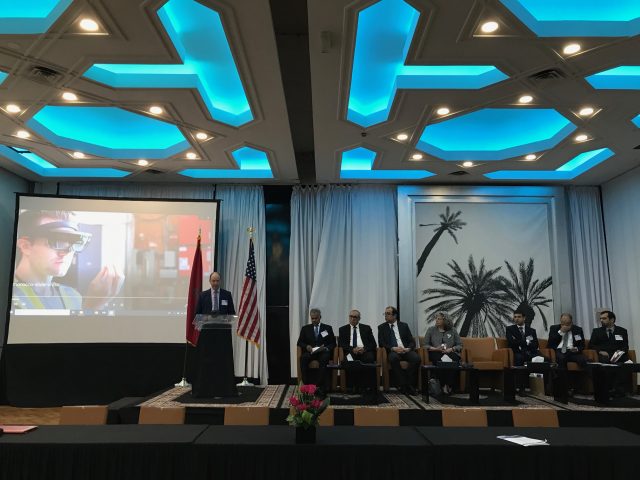
On the issue of emerging technologies, Basri recalled the first OPCW International Conference on the Role of Artificial Intelligence in the Implementation of the Chemical Weapons Convention, held in Rabat in October 2024. The conference remains an undisputed reference for the Organization’s work on future discussions regarding the opportunities and risks posed by artificial intelligence to safeguarding the provisions of the Convention and the global disarmament norm.
With 193 member countries, the OPCW oversees the international community’s efforts to achieve the permanent elimination of chemical weapons. Since the Chemical Weapons Convention entered into force in 1997, making it the most effective disarmament treaty and eliminating an entire category of weapons of mass destruction, all declared chemical weapons stockpiles have been destroyed under the OPCW’s supervision and verification. The Organization was awarded the 2013 Nobel Peace Prize in recognition of its considerable efforts to eliminate chemical weapons.
Morocco, which currently chairs the OPCW Executive Council for the period from May 2026 to May 2027 and has just completed a term as Vice-President of the Conference of the States Parties (CSP30), signed the Chemical Weapons Convention in January 1993 and ratified it in December 1995. Since then, the Kingdom, which has never possessed chemical weapons, has fulfilled all its obligations under the Convention while remaining a staunch advocate of the peaceful uses of chemistry.