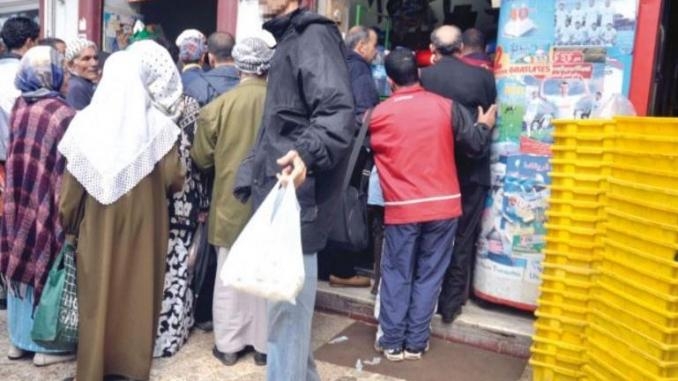
In an Algerian economy held firmly by men in uniform, shortages have become a symptom of decades long dysfunctions.
For more than four decades, ordinary Algerians have queued for the same basic goods while their military-dominated regime recycles the same empty promises.
From Potatoes to cooking oil, semolina, milk, bananas and tires, the list of shortages changes, the failure does not.
From Chadli Bendjedid’s “anti-shortage program” in the 1980s to Abdelmadjid Tebboune’s latest decrees, the pattern repeats itself. Price caps that no one respects, accusations of speculation, symbolic seizures, grandiose announcements of self-sufficiency, and then the return of empty shelves.
Early October, the government set potato producer prices at 60–70 dinars per kilo and retail prices at 80–90. By early November the same potatoes were selling for 110–180 dinars where they could still be found. The result was the disappearance of potatoes from markets.
The Council of Ministers responded by creating new offices for dry legumes, fisheries and forests and said nothing about potatoes.
Cooking oil follows the same script. Factories claim full production, while shelves stay bare.
The 2011 “oil and sugar” riots that killed five people and injured hundreds should have been a warning. Instead, the same companies still dominate the market, the same shortages return, and the same ministers blame citizens for not “helping” the state control prices.
Semolina and flour crises have triggered stadium distributions and police-escorted rationing.
Officials have repeatedly announced an end to wheat imports. They set deadlines of 2019, 2022 and 2026 in vain.
Algeria, an oil and gas exporter, continues to import the most basic calories while its rulers lecture about sovereignty.
Shortages have become an indicator of the operating system of a regime that has never been forced to deliver results. The army-backed power structure that has ruled since independence prefers scapegoats, such as “speculators,” “saboteurs,” foreign plots to structural reform.
Oil revenues fund the security apparatus and a parasitic elite. The population is left with queues and black markets.