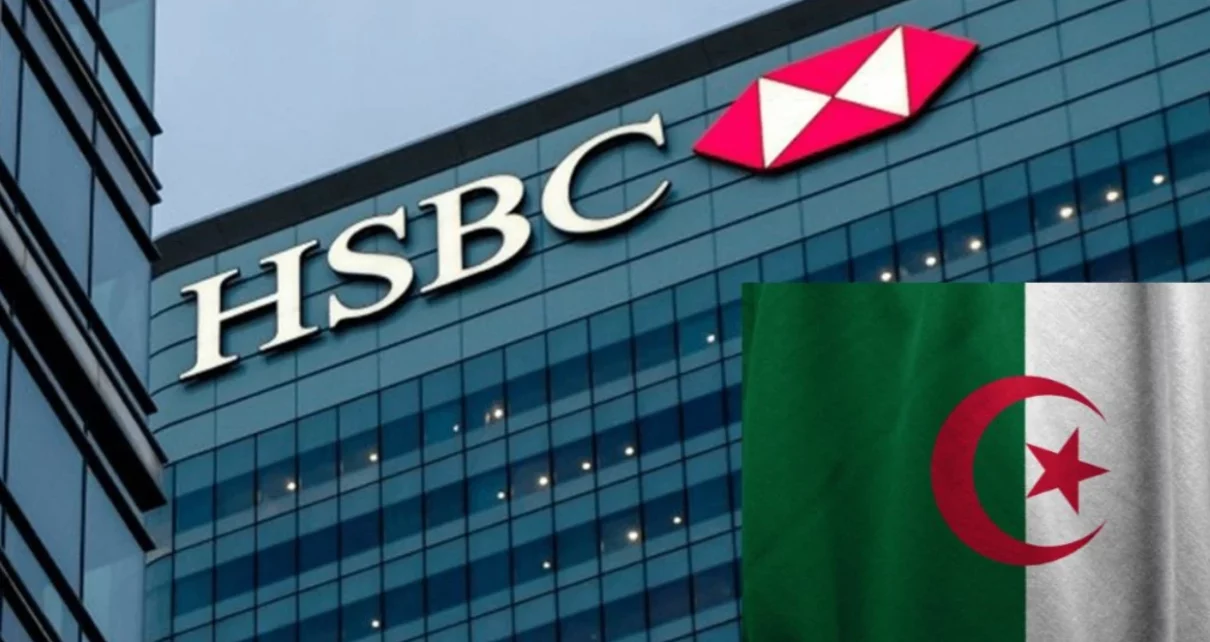
The British HSBC bank has announced its intention to leave Algeria, joining the long list of multinational compagnies which have already fled the country due to the widespread corruption, regulatory barriers, heavy state intervention and escalating local political and social tensions.
HSBC has said its exit is part of a broader ongoing restructuring of the Bank seeking to streamline its global footprint and concentrate resources in regions and core markets with higher growth potential and clearer competitive advantages.
But experts say the withdrawal of British Bank can be explained by a worrying economic situation in Algeria. Despite its major oil & natural gas reserves, the country is reeling under a significant decline of foreign exchange reserves with growing military spending and a rentier economic model which showed its limits.
International companies are leaving the country due to the lack of interest of foreign investors, import restrictions, the absence of major international projects and difficulties of multinational compagnies in repatriating their earnings.
According to latest report of the International Monetary Fund, Algeria’s foreign exchange reserves stood at $51 billion in 2025, down from $68.9 billion in 2024.
The IMF forecasts a continued downward trajectory for Algeria’s foreign exchange reserves over the medium term. The Fund expects the country’s foreign exchanges reserves to fall in 2026 to $46.5 billion covering about 8 months of imports of goods & services.
Foreign investors are fleeing Algeria because of regulatory changes such as limits on foreign financial institutions to minority shares in local operations and the state’s right of pre-emptive purchase of private shares. These measures have heightened uncertainty for foreign businesses.
Furthermore, Algeria’s economy remains heavily dominated by state-owned enterprises and administrative gatekeeping rather than market-driven competition, making it difficult for private operations to move at the speed required for modern business.
The decision of HSBC to quit Algeria comes amid geopolitical and diplomatic tensions as well as the deteriorating the business environment in the country and the failure of the Algerian economy to attract substantial foreign investment.
Several Spanish and UAE investors had pulled out of the hydrocarbons sector and the French left the car industry, while many other foreign businesses are following suit by relocating their investments and projects to a stable and prosperous neighbouring country.
Last year, the European Union added Algeria to its list of high-risk countries for money laundering and terrorism financing. The EU decision aligns with a similar move made in 2024 by the Financial Action Task Force (FATF), a global financial crime watchdog.
Foreign investors and FATF are seriously concerned about the lack of separation of powers and transparency in business, especially in transactions involving state-owned enterprises and military contracts. The opaque system prevailing in Algeria makes it difficult to trace financial flows which facilitate money laundering operations.