ONCF expects close to 100 million passengers by 2030, with revenue of 10bn dirhams and an operating margin above 5bn dirhams. The projections are laid down in the report on public establishments and enterprises accompanying the 2027 finance bill. Progressive commissioning of new infrastructure and rolling stock should raise network capacity substantially, notably around major urban hubs and economic corridors.
The report says the new rail development cycle to 2030 carries an overall envelope of 96bn dirhams: 53bn for extending the Kénitra-Marrakech high-speed line and associated infrastructure, 29bn for 168 new-generation trains, and 14bn for the performance-maintenance program, of which 8bn supports high-speed extension and RER infrastructure and 6bn preserves the existing network.
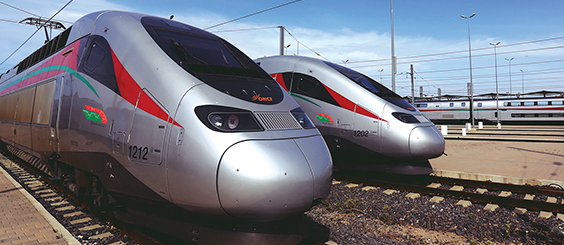
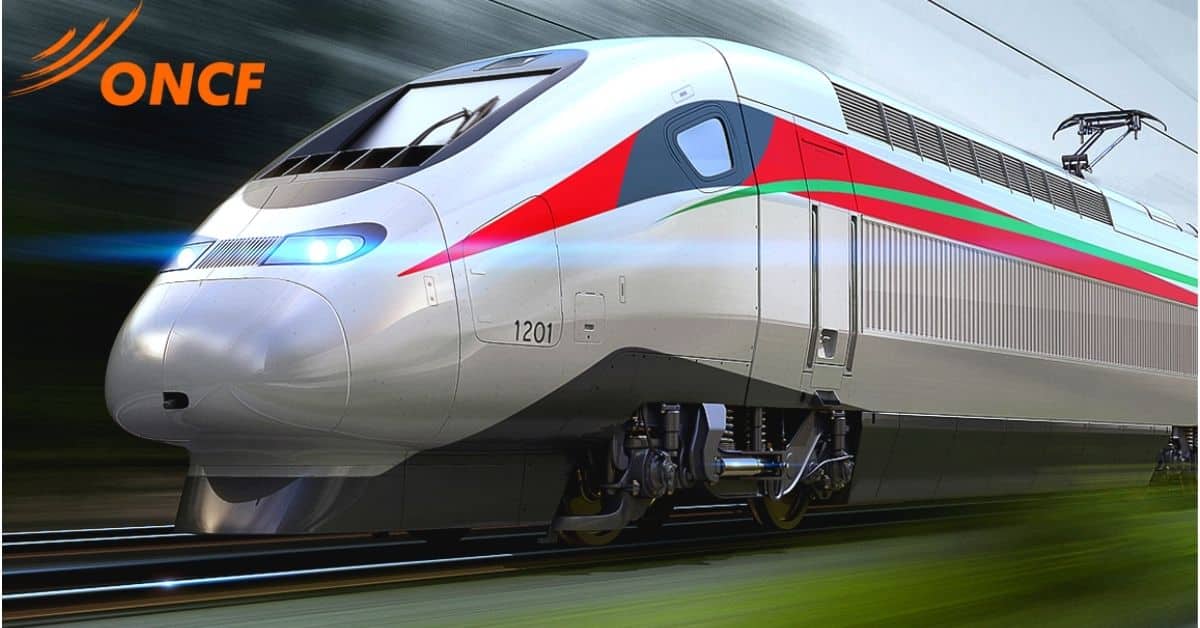
Work on the roughly 430km Kénitra-Marrakech line began in April 2025. The Casablanca rail program, launched in September 2025, includes the Casa-Sud multimodal station, new stations at Mohammed V airport and the future Grand Stade Hassan II, and stronger service between Mohammedia and Nouaceur. Rolling-stock renewal covers 18 high-speed trains, 40 intercity trains and 110 RER units, with industrial offset commitments including local RER train manufacturing capacity.
On finances, ONCF’s revenue reached nearly 2.48bn dirhams at end-June 2026, up 2%, with a net result of minus 716m dirhams and investment spending above 4.83bn. For 2026, closing forecasts put revenue above 5.27bn dirhams, operating income at 216m and net result at minus 652m.
Investment is forecast at 18.2bn dirhams in 2026, down nearly 4% from 2025, and above 29bn in 2027. Revenue is estimated at more than 6.05bn dirhams in 2027, 6.56bn in 2028 and 7.04bn in 2029.