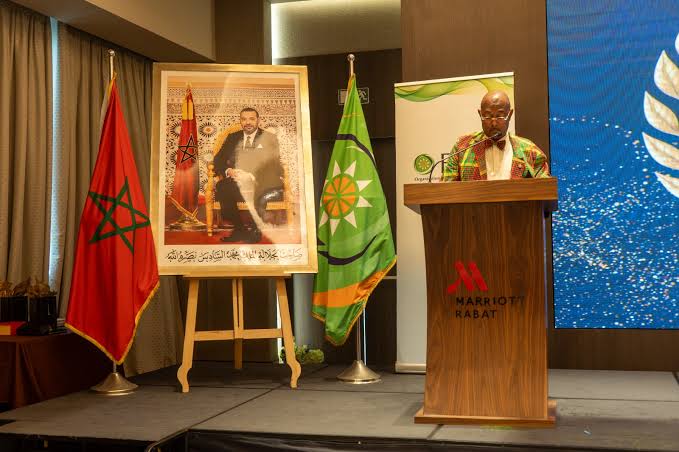
The Embassy of the Organization of Eastern Caribbean States (OECS) in Morocco held its first-ever graduate recognition ceremony Saturday in Rabat, honoring 14 students who completed their studies in the Kingdom under a scholarship program that provides 120 places annually to OECS member states. The ceremony, held under the theme “Through Perseverance Comes Triumph,” brought together graduates, diplomats, Moroccan institutional representatives and academic partners.
Ambassador Ian M. Queeley, who presided over the event, framed the graduates’ journeys around perseverance, describing it as a decision repeated until it becomes a way of life, and extended that idea to the diplomatic relationship itself, comparing the willingness of Morocco and OECS states to keep engaging through difficulties to the same determination required to complete a degree.
Speaking on behalf of Morocco’s Foreign Ministry, Moroccan Agency for International Cooperation (AMCI) Director General Badr Alaoui Btarni described the agency’s presence as reflecting a partnership extending well beyond academic exchanges, rooted in a vision that places human development, solidarity and expertise-sharing at the heart of Morocco’s South-South cooperation. He noted Moroccan-trained Caribbean graduates have pursued fields ranging from biotechnology and engineering to other technical and professional disciplines, and pointed to Morocco’s broader cooperation with the Caribbean spanning agriculture, fisheries, renewable energy, water, health and skills development, including learning-visit programs for Caribbean officials.
Alaoui Btarni also recalled Morocco’s solidarity with Caribbean nations following natural disasters, citing support extended on King Mohammed VI’s instructions after hurricanes struck Antigua and Barbuda and Dominica in 2017, and several Caribbean countries after Hurricane Beryl in 2024. He told the graduates their time in Morocco represented more than an academic milestone, describing them as ambassadors of the friendship between Morocco and the Caribbean, while Queeley urged them to translate what they gained into action within their home communities.