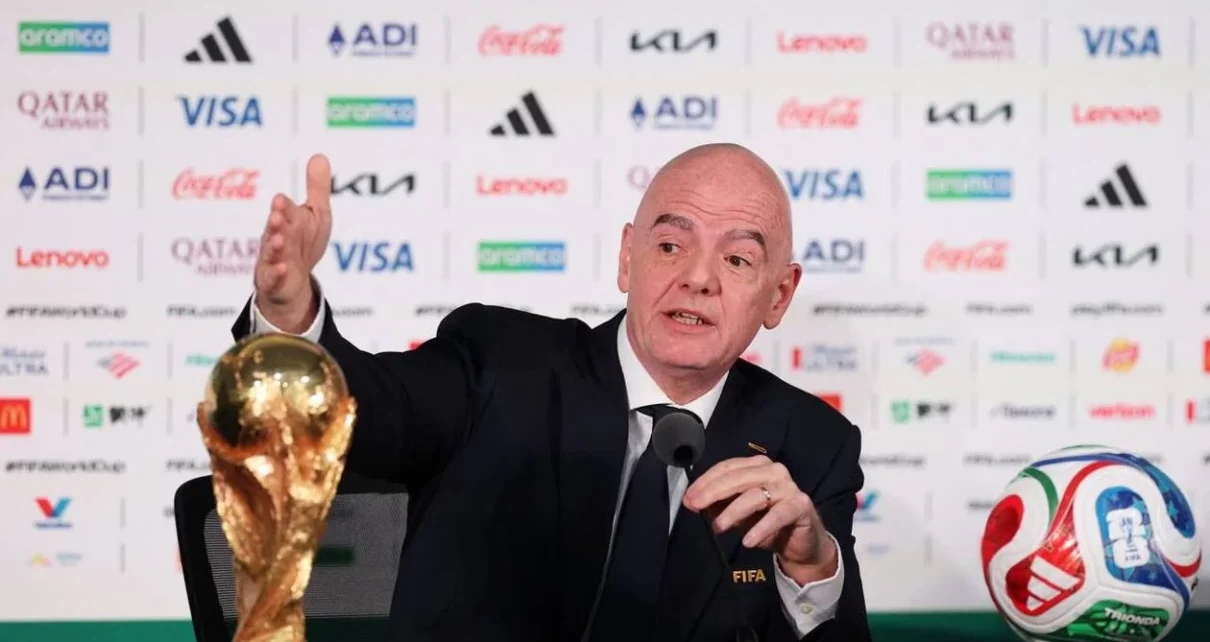
As the 2026 World Cup kicked off under the gaze of a global audience, Algeria found itself thrust into an unwelcome spotlight after FIFA President Gianni Infantino publicly called for the release of jailed French journalist Christophe Gleizes, turning a sporting stage into a sharp indictment of the country’s human rights record.
Speaking in Mexico City on June 10, Infantino broke with protocol to highlight the case, symbolizing Gleizes’ absence with an empty chair at his press conference.
“There is an empty seat in this room today, and this empty seat is for a French journalist, Christophe Gleizes,” he said, describing him as “the only sports journalist detained in the world.”
The FIFA chief went further, urging Algerian authorities to show clemency. “I hope, in a great act of humanity, he will be given grace, presidential grace, and can even join us here during the World Cup,” he said, adding that the journalist had been accredited to cover the tournament.
The intervention, delivered on the eve of the opening match, gave global visibility to a case that has come to symbolize broader concerns over press freedom in Algeria, where rights groups have long warned that journalists face mounting restrictions and legal pressure.
Gleizes, a contributor to French magazine So Foot, has been imprisoned since 2024 after travelling to northeastern Algeria to report on JS Kabylie. In June 2025, he was sentenced to seven years in prison on charges of “glorifying terrorism” and “possessing publications harmful to national interest” linked to contacts with figures in the Kabylie region. The sentence was upheld on appeal later that year.
His detention has drawn widespread criticism from media organizations and diplomatic channels, with calls for his release repeatedly ignored by Algerian authorities. Appeals from press freedom groups, as well as interventions by French officials, have so far failed to secure his release, despite legal avenues for a presidential pardon being opened in recent months.
The case has also highlighted Algeria’s increasingly fraught relationship with independent journalism. International watchdogs, including Reporters Without Borders, have described the country as a difficult and often hostile environment for reporters, citing arrests, prosecutions and legal pressures that have tightened space for media in recent years.
Infantino’s public appeal, combined with the symbolic act of granting Gleizes World Cup accreditation, underscores the extent to which the case has moved beyond a bilateral issue to become a global reputational challenge.