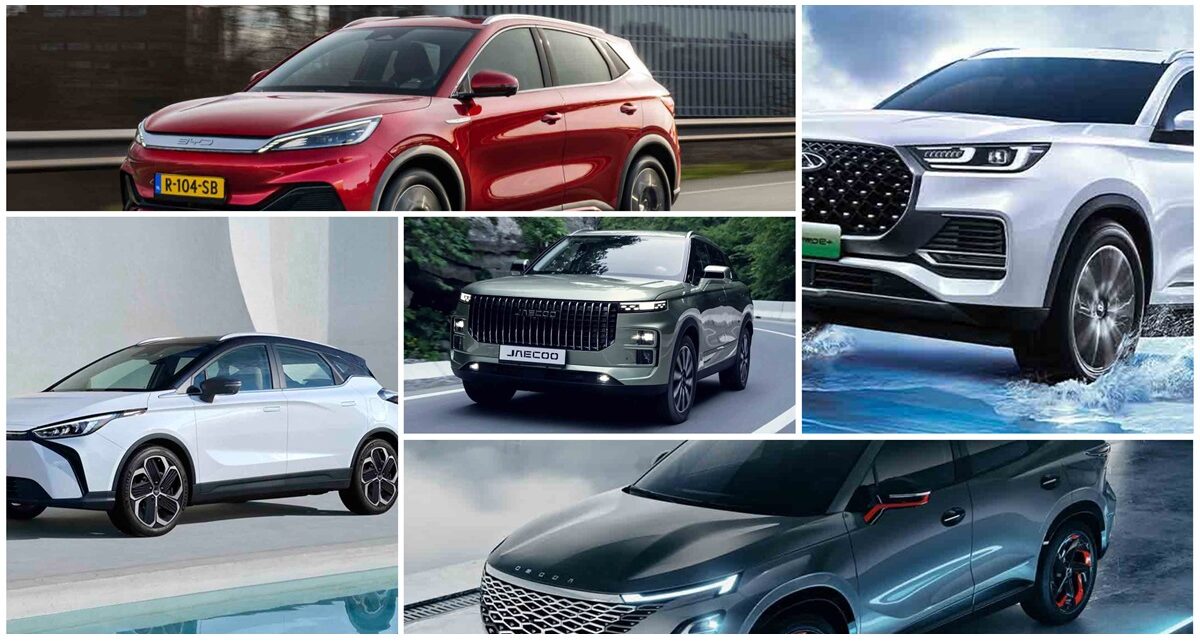
Chinese automotive brands posted a 215 percent increase in sales on the Moroccan market in 2025, rising from 5,740 units to 18,053, according to data from the Association of Vehicle Importers in Morocco (AIVAM). Their market share more than doubled, jumping from 3.25 percent to 7.67 percent, in a market that itself grew by 33.4 percent to reach 235,372 total registrations — a record for Morocco. The scale and pace of the progression place Chinese brands on a trajectory that is reshaping the country’s automotive competitive landscape.
The structural shift within the Chinese segment is as notable as its overall growth. In 2024, 61 percent of Chinese brand sales were passenger vehicles and 39 percent light commercial vehicles. In 2025, passenger vehicles accounted for 74.5 percent of the total, rising from 3,502 to 13,456 units. This shift from a utility-anchored to a consumer-anchored profile indicates that Chinese brands are no longer entering the market through the path of least resistance — they are competing directly for the most contested segment, where brand loyalty and consumer preference have historically given incumbent manufacturers their strongest advantage.
BYD, Changan, and GWM have emerged as the segment’s leading brands. BYD recorded 3,702 registrations, against 701 in 2024, representing 20.5 percent of total Chinese brand sales. Its success is anchored in an electrification positioning and the rapid adoption of specific models such as the Seal U. Changan followed with 1,898 units and GWM with 1,439, both benefiting from diverse, competitively priced ranges. In the light commercial segment, DFSK maintained leadership with 2,778 units, while Dongfeng surged to 1,460.
The arrival of new entrants reinforces the segment’s momentum. Soueast recorded 656 passenger vehicle registrations in its first year on the market, while Deepal, Dongfeng VP, Jetour, Leapmotor, Zeekr, and Lynk & Co all established initial volumes. The pattern is notable: new entrants are generating commercial traction within their first year, supported by pre-built distribution networks and immediately competitive product ranges — a speed-to-market capability that differs fundamentally from the extended launch curves typical of earlier decades.
The broader significance of this evolution for Morocco’s automotive industry is strategic. Morocco is both a consumer market and an automotive manufacturing hub, with Renault and Stellantis producing hundreds of thousands of vehicles annually for export. The rapid penetration of Chinese brands in the domestic market creates a new competitive dynamic for these industrial anchors and their local supply chains, and raises policy questions about the future composition of Morocco’s automotive ecosystem as electrification accelerates and Chinese manufacturers increasingly target European and African markets simultaneously.