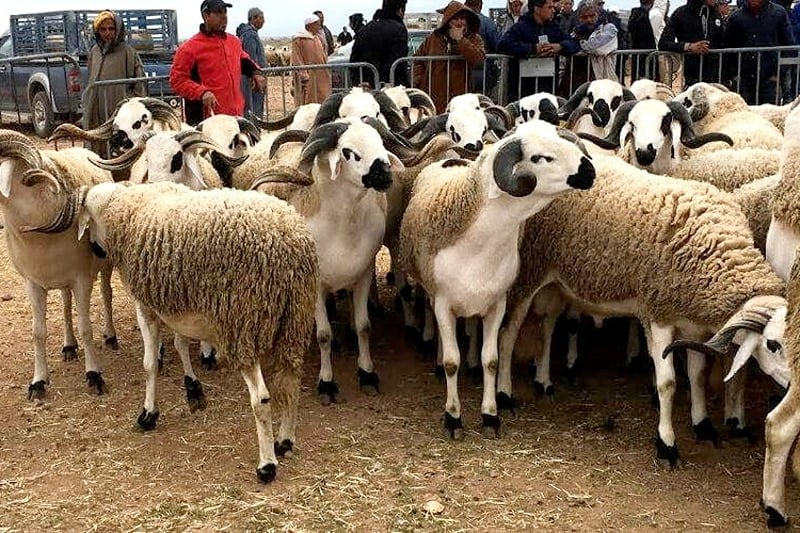
Morocco’s government has announced a series of measures to tighten oversight of Eid al‑Adha livestock markets, as authorities seek to curb speculation and stabilize prices amid strong seasonal demand, the head of the government’s office said.
The decision introduces regulatory steps aimed at organizing the sale of sacrificial animals and preventing practices that contribute to unjustified price increases during the holiday.
Under the new rules, livestock sales will be restricted to officially designated and licensed markets, while direct sales, including those conducted within farms, will remain permitted under existing regulations.
Sellers must declare their identity, the number of animals offered and their origin to local authorities before entering markets. The resale of livestock within the same markets is prohibited, as are practices such as artificial bidding, price-fixing agreements and the hoarding of animals to create artificial shortages.
Authorities warned that strict enforcement will be applied, with penalties including fines, prison sentences, temporary closure of sales points and the seizure of livestock and equipment used in violations.
Last year, Moroccans have been urged not to slaughter sheep on Eid Al Adha to enable the reconstruction of the national livestock herd hit by years of drought.
Agriculture Ministry Ahmed Bouari reassured lawmakers over supply and pricing, saying the national herd is in “good health” and free of contagious diseases.
He acknowledged public concern over rising costs but said prices are expected to decline in the coming days as supply stabilizes ahead of the holiday.