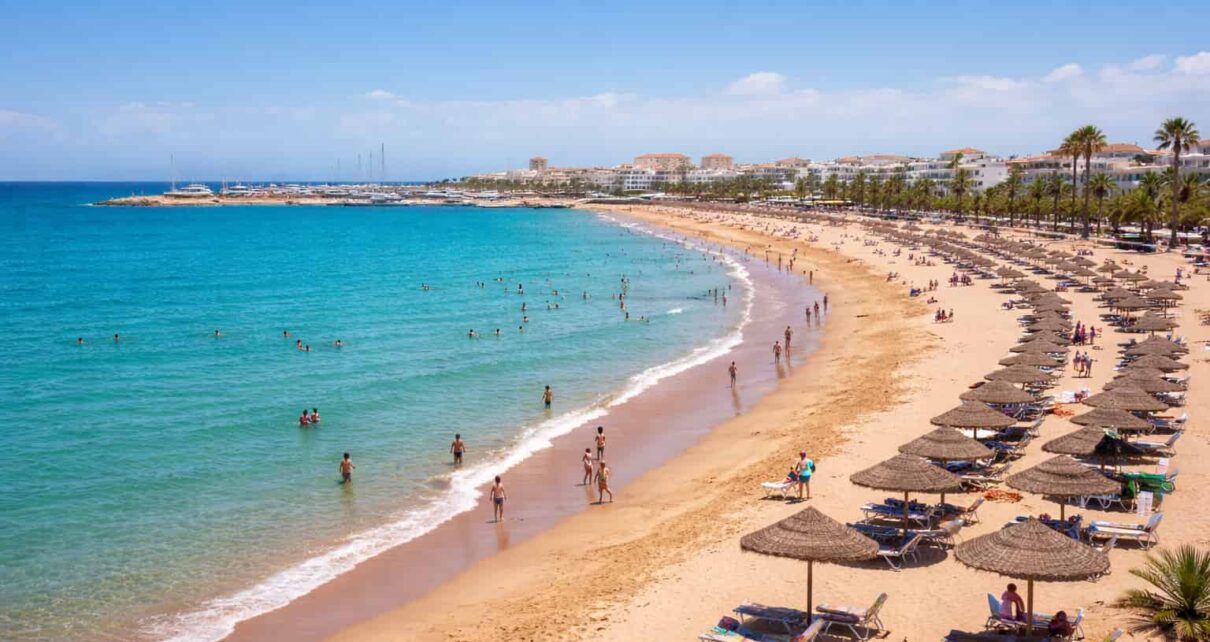
Saïdia stands as a genuine economic engine for Morocco’s Oriental region, yet the seaside resort continues to fall short of its full potential, held back by a business model centred on all-inclusive packages, limited air access and the closure of regional land borders, according to a Finances News Hebdo analysis relayed by Le360. Despite colossal investment, persistent hyper-seasonality continues to undermine the profitability of this flagship Plan Azur project.
Saïdia’s rise has unfolded alongside other major regional projects, including the Oujda technopole, the Berkane agropole and the Selouane industrial park, a momentum expected to intensify once the Nador West Med port complex becomes operational. Yet the resort’s tourism activity remains constrained by its distance from major European source markets and by the prolonged closure of the Algerian border, which deprives it of a natural regional market with strong potential. Youssef Zaki, president of the Oriental’s regional tourism council, said Saïdia still functions as an economic driver but that the priority now is extending its operating season to give professionals the continuity their stability requires.
Though fully operational today, Saïdia’s financial and operational returns remain well below initial expectations despite roughly 15 billion dirhams in public investment. The project passed through several successive operators, from Spain’s Fadesa to Moroccan developer Addoha, before the Caisse de Dépôt et de Gestion stepped in through the Société de développement de Saïdia, injecting 300 million dirhams to relaunch the site alongside 600 million dirhams for surrounding infrastructure. Economist and tourism operator Said Tahiri noted Saïdia remains the only Plan Azur resort to have truly come to fruition, currently counting 6,000 beds of the 16,000 originally planned.
Analysts point to three structural problems limiting the resort’s growth: the dominance of the all-inclusive model, which captures visitor spending within hotel structures for the benefit of international operators and starves local businesses of direct returns; weak air connectivity via Oujda-Angad airport, insufficient to capture upmarket European travelers without direct links to cities like Paris, Brussels, Amsterdam or Madrid; and hyper-seasonality itself, with occupancy rates near 80 percent between June and September before near-total dormancy the rest of the year. The magazine concludes the resort’s future hinges on strengthening air links, diversifying the leisure offering and extending activity beyond the summer calendar.