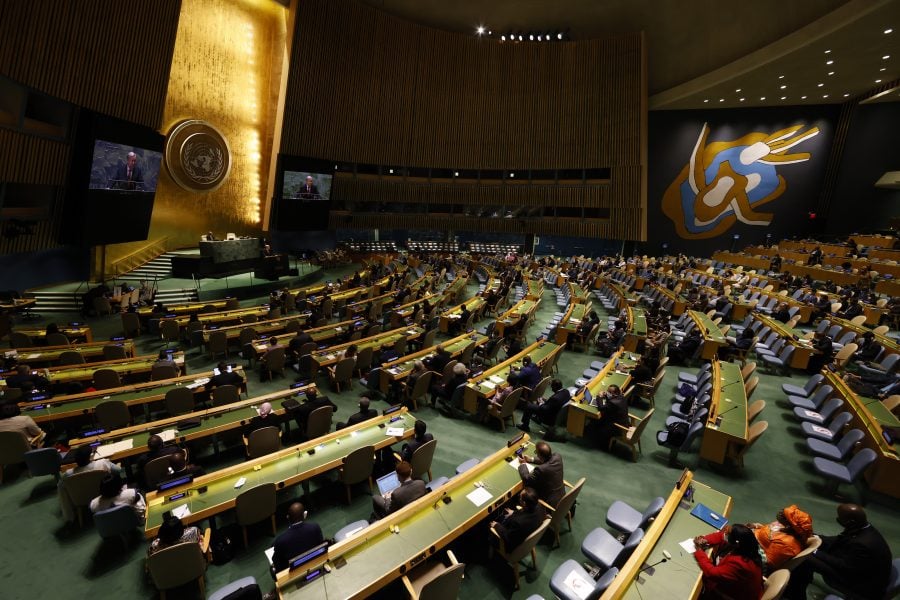
Several delegate and petitioners have called for delisting the Sahara issue from the UN Special Committee after the adoption of the UNSC resolution 2797 endorsing the Autonomy Plan under Moroccan sovereignty, saying the plan is backed by 130 UN Member-States – including three permanent members of the Security Council.
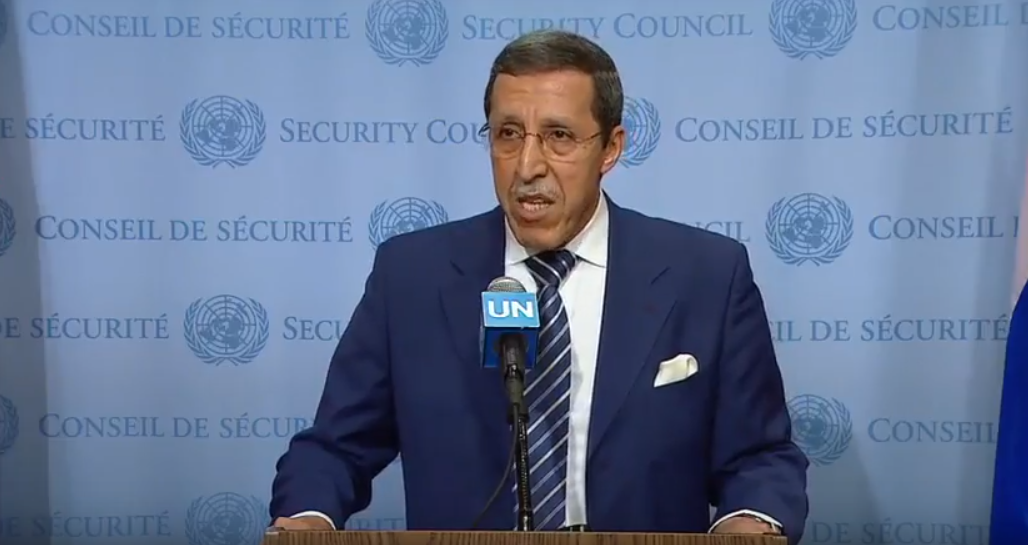
UN Security Council Resolution 2797 is “an unprecedented political verdict and a roadmap” to resolve definitively the Sahara issue, said Morocco’s permanent representative to UN Omar Hilale at the UN Committee-24 convening in New York.
“Those who see the Moroccan Sahara as an issue of decolonization are misreading the situation, describing the Special Committee’s debate of this topic as “sterile”, said Mr. Hilal, stressing that the decolonization process of the Sahara ended with its irreversible return to its motherland, the Kingdom of Morocco, in 1975.
He deplored that the Committee continues to address the Sahara issue according to an obsolete approach based on the same arguments, the same resolutions, the same ideological position, turning a blind eye to the major diplomatic and political progress achieved.
“This issue is the exclusive competence of the Security Council” and does not fall under decolonization; therefore, the Special Committee is duplicating work, said the Moroccan ambassador.
The UNSC resolution 2797 adopted on 31 October 2025 was “a historic turning point”, he said. It recognizes Morocco’s sovereignty over the Sahara territory and rejects the Polisario referendum proposal. It also calls upon the four parties to the conflict (Algeria, Morocco, Polisario and Mauritania) engage in a political process, on the basis of the Moroccan autonomy plan, said Mr Hilal.
The Sahara dispute is fueled by Algeria. It is affecting the Arab Maghreb and posing a serious threat to the stability and security of the entire region of North Africa and the Sahel, said the Moroccan ambassador.
Following the adoption of latest resolution on the Sahara, the question is no longer what framework will resolve this dispute, but how much longer the other parties will persist in obstructing and delaying the UN-US led political process, said Mr. Hilal, warning that history will hold accountable those responsible for missed peace opportunities.
For his part, the Ambassador of Côte d’Ivoire highlighted the growing international support for Moroccan Autonomy plan in Sahara, saying
the plan enables the local inhabitants to participate in sociopolitical and economic management.
He also welcomed Morocco’s efforts to strengthen the role of regional human rights commissions in Laayoune and Dakhla.
The Representative of Antigua and Barbuda commended the realistic and pragmatic Moroccan initiative for advancing the political process and achieving a lasting political settlement in conformity with international law.
She hailed the impressive socioeconomic development in the Moroccan Sahara thanks to investments in infrastructure, green energy, education and employment opportunities.
“Sustainable development and improved living conditions are important elements of regional stability,” said the diplomat of Antigua and Barbuda,
stressing the need to respect the human rights of those held in Tindouf camps.
The Representative of Indonesia called on all parties to the Sahara conflict to remain engaged in the political process with a view to reaching a realistic, pragmatic solution.
The Delegate of Sierra Leone said Security Council resolution 2797 spurred a momentum in efforts to resolve the Sahara longstanding dispute. After expressing support for Morocco’s autonomy proposal, he praised the “sustainable, inclusive and responsible” development projects taking place in Sahara.
The Representative of Comoros said the Moroccan Autonomy proposal was at the heart of recent quadripartite consultations in Washington and Madrid.
The Delegates of Saint Kitts and Nevis, Guatemala, Dominican Republic, Qatar, Saudi Arabia, Guinea-Bissau, Equatorial Guinea, Benin, and Bahrain, who spoke for the Gulf Cooperation Council, also voiced support for Morocco’s autonomy proposal.
Mrs. Ghalla Bahiya, of the Regional Council of Dakhla-Oued Ed-Dahab, was among the many speakers who praised the landmark UNSC resolution 2797, saying it brought “unprecedented clarity” to the issue.
The text described the Autonomy under Moroccan sovereignty as the most feasible solution, she said, lauding the international support for this plan which must be implemented.
As an elected official and woman from Dakhla-Oued Ed-Dahab, she also pointed to the outstanding transformation underway in the Moroccan Sahara thanks to the major investments injected in various key strategic sectors. Dakhla, she said, is a strategic getaway to the African and European markets.
Najib Boudhim, of the NGO 9 MARS, said the Security Council resolution adopted a pragmatic political solution to end an “artificial conflict that has lasted far too long” and negatively affected regional stability.
The UNSC resolution consolidated the principles of realism and compromise as the essential basis for resolving the issue. It also called for constructive engagement from all parties, “clearly reflecting the direct role of Algeria”, he added. He also deplored the various forms of exploitation that are rampant in Tindouf camps due to the fragile humanitarian situation there.
Mohammed Elaissaoui, from the Organization seeking to end Human Rights Violations in Tindouf Camps, said the Sahrawis, including women and children, held in the Polisario-controlled camps are deprived of their fundamental right to movement.
The Polisario leaders refuse to conduct a census of the population held in these camps and continue their embezzlement of the international aid destined for the sequestered Sahrawis, said Mr. Elaissaoui holding Algeria responsible for the sufferings of the Sahrawi population taken hostage in their territory.