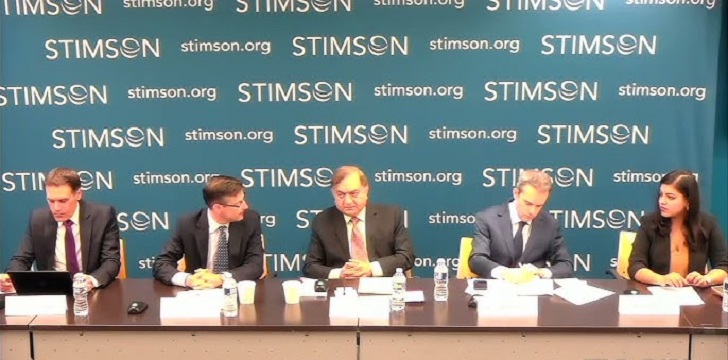
Morocco has become one of the most strategic and promising states in Africa and the Arab world and has leveraged, under King Mohammed VI, its geography to facilitate trade, investment, and security cooperation across continents, pointed out the prestigious American think tank The Stimson Center in a report on the Kingdom.
The report emphasizes that Morocco is undergoing a profound transformation that is gradually enabling it to establish itself as an influential middle power linking Europe, Africa, and the Middle East. It is also effectively reshaping the Maghreb’s strategic architecture through what analysts have termed “strategic transactionality,” a foreign policy based on disciplined alignment of interests — securing diplomatic and economic support while offering cooperation on shared priorities.
The report notes that the Kingdom is no longer limited to being an agricultural or tourism-based economy, but is now asserting itself as a competitive industrial platform, a major logistics hub, and an emerging energy player.
The think tank particularly highlights the country’s achievements in the automotive, aerospace, electronics, batteries, and green technology sectors. Thanks to its political stability, modern infrastructure, proximity to Europe, and free trade agreements, Morocco is attracting increasing international investment and integrating into global value chains, the report notes.
Morocco’s automotive sector is notably described as one of the most advanced on the African continent, with strong export capacity and rapid technological upgrading. Several international groups now view Morocco as a strategic base serving European, African, and Middle Eastern markets.
The report also stresses the Kingdom’s energy ambitions, describing Morocco as a regional leader in renewable energy thanks to its massive investments in solar, wind, and green hydrogen projects. The Noor Ouarzazate Solar Complex is cited as the symbol of this ambitious energy strategy. According to the Stimson Center, the country could soon become a major supplier of green energy to Europe.
From a geostrategic perspective, the report considers Morocco’s geographic position a decisive asset, as it serves as a bridge between Europe and Africa as well as a global logistics crossroads. Tanger Med is presented as one of the Kingdom’s greatest strategic successes and as a key driver of Moroccan industrialization and international trade.
The American think tank also highlights Rabat’s growing diplomatic influence in Africa, particularly through Moroccan investments in sub-Saharan Africa in the banking, telecommunications, and infrastructure sectors. Morocco is now regarded as a major partner for many African countries.
The report likewise underscores the Kingdom’s strong relations with the United States, the European Union, and the African Union. Washington and Brussels see Rabat as a reliable ally in combating terrorism, illegal migration, and security threats in the Sahel.
Addressing the long-standing artificial territorial dispute over the Sahara, the Stimson Center believes that Morocco has significantly strengthened its diplomatic position through an active strategy, international partnerships, and major investments in the Southern Provinces.
The Moroccan autonomy initiative is presented as a “serious, credible, and pragmatic” solution and is said to enjoy growing support from African, Arab, and Western countries, the report recalls. It also cites the approximately thirty states that have opened consular representations in the Southern Provinces as evidence of increasing international recognition of Morocco’s legitimate position on the issue. In contrast, the report notes that Algeria, which has prolonged this artificial conflict for more than half a century, has become increasingly isolated both regionally and internationally in the diplomatic struggle opposing it to Morocco over the dispute.
In conclusion, the report presents Morocco as a stable, ambitious, and forward-looking emerging power, destined to play a central role in African and Mediterranean economic, energy, and geopolitical balances in the coming decades.