Morocco aims to produce more than 1.8 billion cubic meters of desalinated water per year by 2031, according to the presentation note of the 2027 Finance Bill.
The ambitious goal aligns with the New Development Model, which prioritizes conventional water resources for inland areas while meeting coastal demand through desalination.
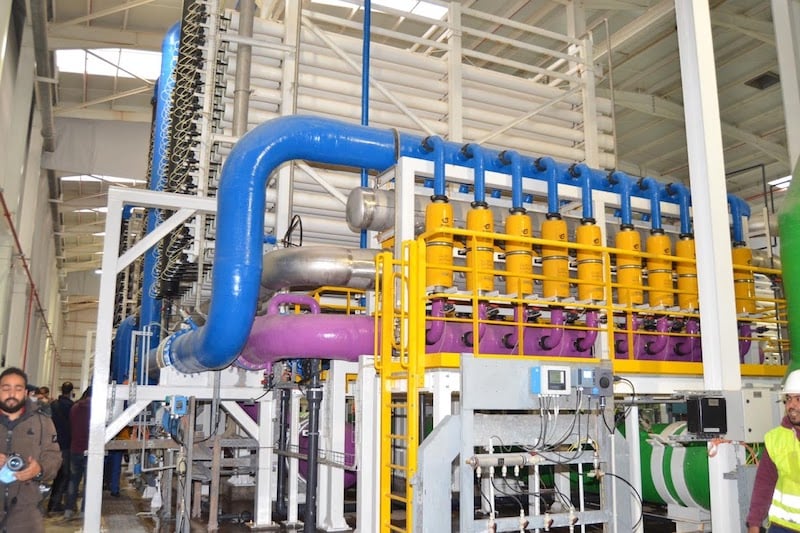
Stations in Agadir, Jorf Lasfar, and Safi are operational, alongside 186 modular desalination units for seawater and brackish water with a combined capacity of 35 million cubic meters annually, built at a cost of 2.94 billion dirhams.
These provide critical non-conventional resources for water-stressed regions.
The Dakhla station, the Safi extension supplying Marrakech, and the first phase of the Greater Casablanca plant are set to enter service in the coming months.
A new generation of renewable-powered stations in the Oriental, Souss-Massa, Tangier, Guelmim-Tantan, and Rabat regions is scheduled for operation between 2029 and 2030.
Approximately 1,000 MW of renewable energy, including wind farms at Bir Anzarane, Jraïfia, and Dakhla, has been reserved to power these facilities.
Transport infrastructure for desalinated water will cost 20.8 billion dirhams, connecting stations in Casablanca, Safi, Souss-Massa, the Oriental, Rabat, and Tangier to demand centers.
Priority in 2027 focuses on securing supplies for Marrakech from Safi and for Greater Casablanca.
In agriculture, public-private partnerships are expanding. The Chtouka project irrigates 15,000 hectares, preserving an estimated 9 billion dirhams in value added and nearly one million workdays.
The Dakhla initiative is expected to yield about 500,000 tons of early vegetables and create nearly 10,000 permanent jobs.